
Sustainability Needs More Than Strategy. It Needs Stories.
How art can help organisations turn environmental ambitions into cultural change.
Organisations have never been clearer about their sustainability ambitions. Yet transforming targets into meaningful action remains a deeply human challenge. We believe art and creativity can play a strategic role, helping people connect emotionally with the futures organisations are working to create.
The Missing Piece in Sustainability Strategy
Most organisations have developed robust sustainability strategies. Targets have been set, roadmaps established and metrics defined. Yet despite significant investment in environmental programmes, many organisations continue to face the same challenge: helping people feel personally connected to the change.
Sustainability is often communicated through reports, statistics and policy statements. While these are essential for accountability and governance, they rarely create an emotional connection. Employees may understand what the organisation is trying to achieve, but not always why it matters to them, or how they contribute to the wider journey.
The reality is that sustainability is not simply an operational challenge. It is a cultural one.
Lasting change requires more than new technologies, building certifications or carbon reduction targets. It requires people to adopt new behaviours, embrace different ways of thinking and feel invested in a shared future.
This is where art can play a strategic role.
Art has the ability to translate complex environmental ambitions into human stories. It makes abstract concepts tangible, creates space for reflection and helps individuals find their own place within a collective vision. In doing so, it can bridge the gap between organisational strategy and personal engagement.
"People rarely change because they've seen a report. They change because they've found meaning."
Sustainability is a Cultural Challenge
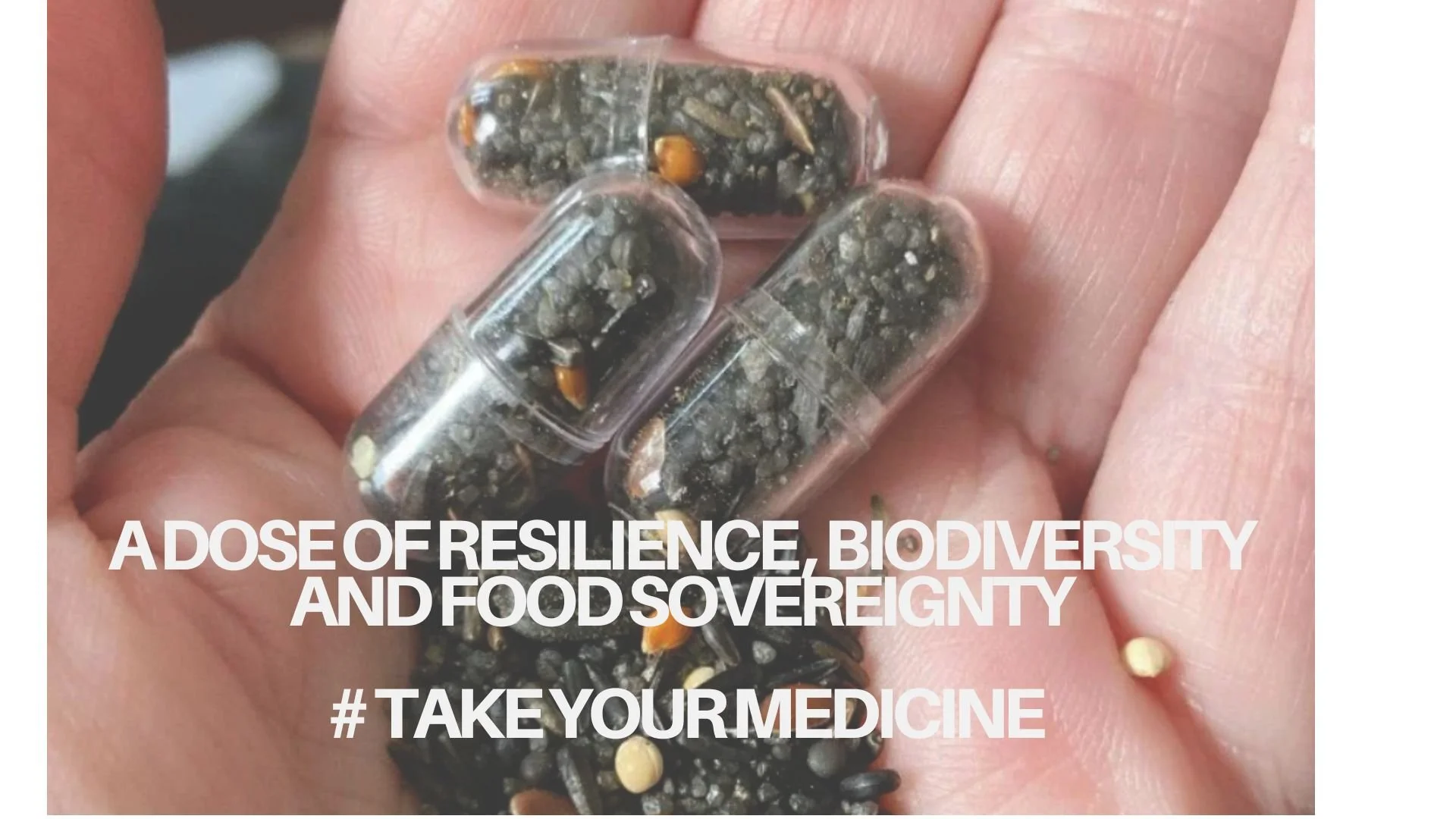
Many sustainability strategies focus on infrastructure, technology and reporting. Yet beneath every environmental target sits a more fundamental challenge: change.
Change in behaviour.
Change in thinking.
Change in culture.
Organisations can invest in sustainable buildings, low-carbon systems and ambitious roadmaps. But meaningful transformation only happens when people understand, believe in and contribute to the journey.
This is where creative practice becomes valuable. Art has a unique capacity to engage both intellect and emotion, helping people connect with complex ideas in ways that data alone cannot.
When sustainability becomes part of a shared narrative rather than a corporate initiative, people begin to see themselves within it.
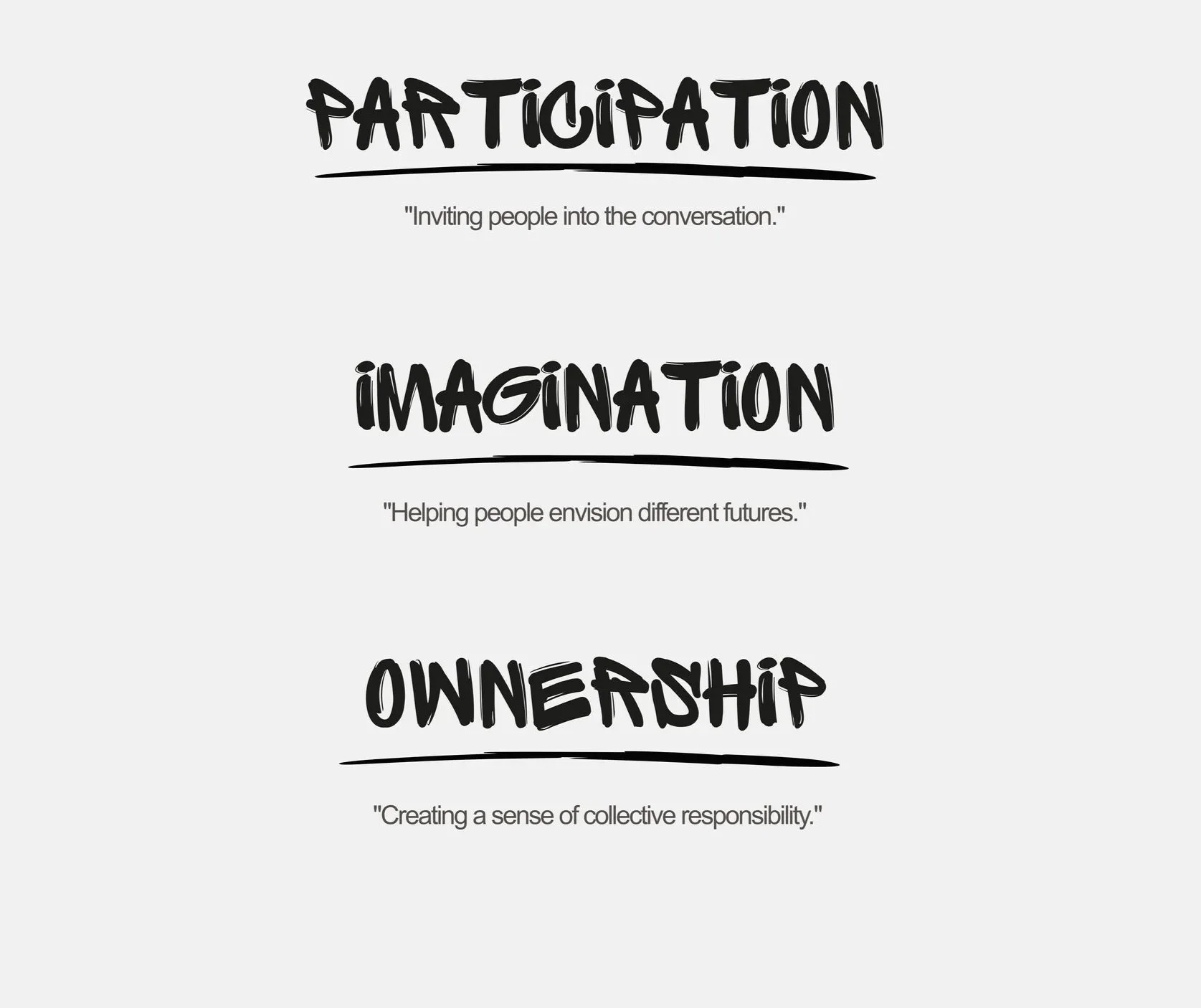
The most effective sustainability programmes create all three.
Osborne Clarke: The Decarbonisation Journey
The Brief
When Osborne Clarke moved into Halo, one of the UK's most sustainable office buildings, the relocation represented far more than a change of address. It was a visible commitment to decarbonisation, innovation and sustainable growth.
The challenge was not simply to communicate those ambitions, but to create a meaningful connection between people and purpose. How could employees see themselves within the firm's sustainability journey? How could environmental commitments become part of workplace culture rather than remain strategic objectives on paper?
Art Acumen was commissioned to help transform a complex organisational ambition into a shared human story.
The process
Rather than beginning with an artwork, we began with conversation.
Working alongside a poet-in-residence, colleagues across the business were invited to reflect on their personal experiences, environmental aspirations and hopes for the future. Through workshops, creative questionnaires and guided reflection, employees explored what decarbonisation meant in their everyday lives.
These individual perspectives were woven into a collective poem, creating a shared narrative that captured both the challenges and possibilities of positive change.
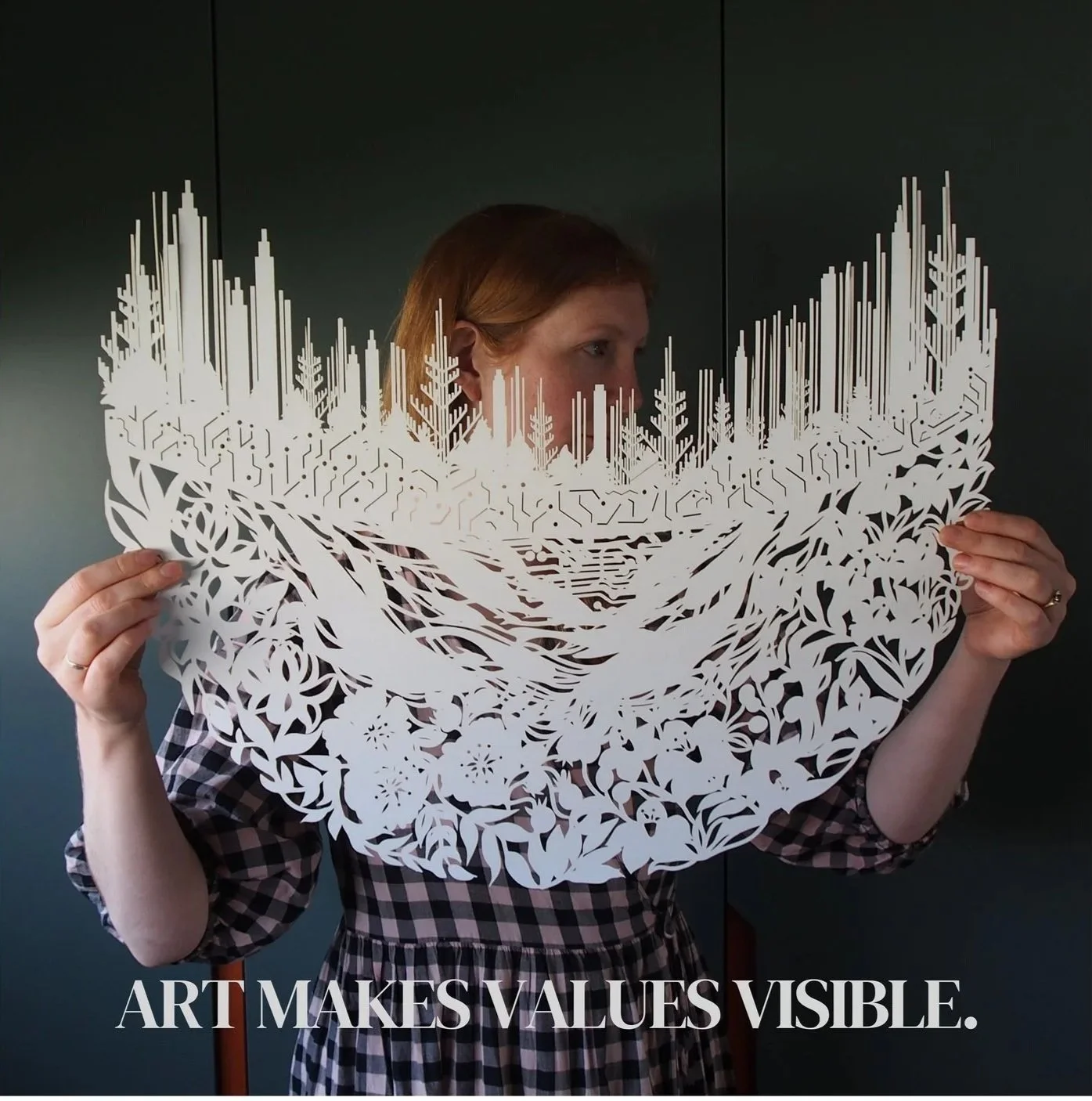
Artist Sarah Dennis then translated these voices into a series of intricate papercut artworks. Her triptych explored three themes: the present, the future and a shared promise of action.
The result was a creative process shaped not by a single artist's vision, but by the experiences, values and ambitions of the Osborne Clarke community itself.
The Outcome
The finished commission became more than an installation within the workplace.
It provided a visible expression of the firm's sustainability values, rooted in the authentic voices of its people.
By inviting participation from the outset, the project fostered a sense of collective ownership and strengthened engagement with the organisation's environmental ambitions. Sustainability was no longer something being communicated to employees. It was something employees had helped shape.
The artwork now serves as a lasting reminder that meaningful change begins with shared understanding, collective imagination and a commitment to act together.
"This commission wasn't just an artwork, it was an experience.
The process was collaborative, thoughtful and beautifully human."
Artists as Environmental Storytellers
Sustainability is often discussed through targets, data and operational change. Yet some of the most powerful shifts in awareness happen not through information, but through reflection.
Artists have long helped us understand our relationship with the natural world. They invite us to slow down, observe more closely and consider our place within wider environmental systems. In workplace settings, art can create moments of contemplation that keep sustainability present long after a campaign has ended or a report has been published.
Lisa Marie Price: Sustainability Embedded in the Making
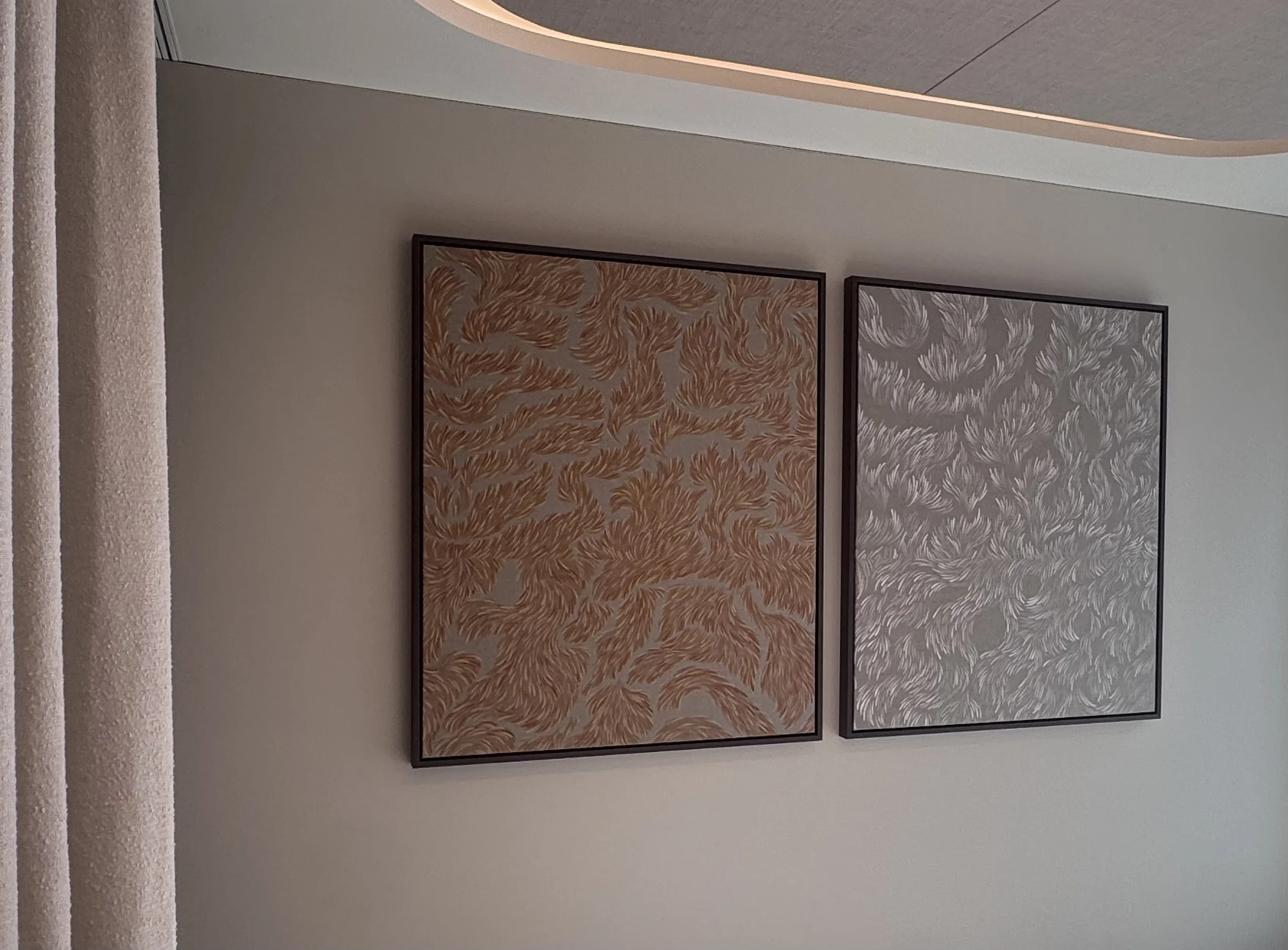
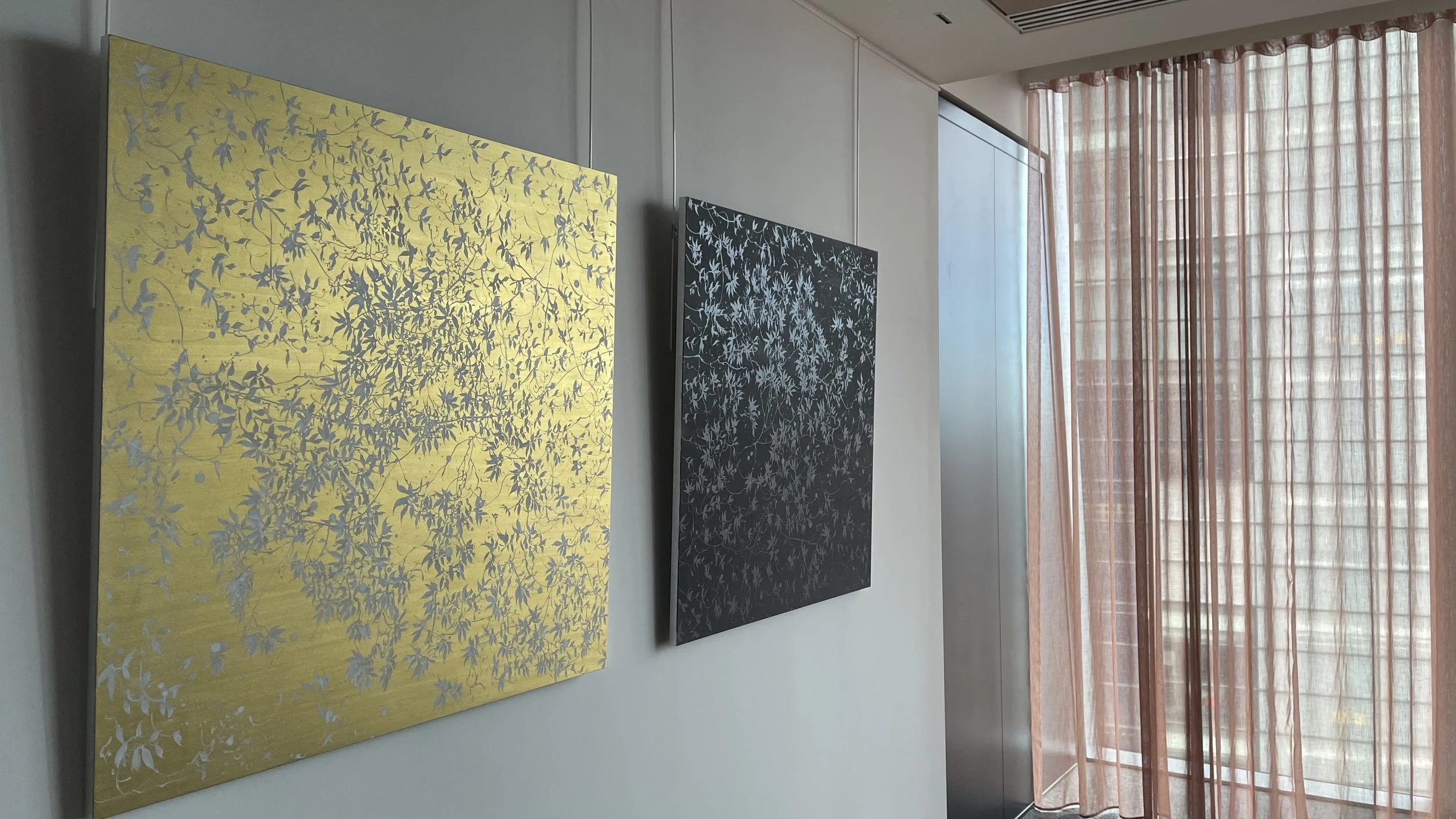
For Lisa Marie Price, sustainability is not simply a theme but a fundamental part of her artistic practice. Working with hand-made pigments created from responsibly gathered rocks, minerals and natural materials, her paintings carry a direct connection to the landscapes from which they originate.
Her process begins through careful observation of place, exploring coastlines and natural environments, and collecting small quantities of loose materials that can be transformed into colour. Each pigment is ground and prepared by hand, creating a tangible link between the artwork and the environment that inspired it. The process is intentionally slow, requiring patience, presence and a deep respect for natural resources.
Through this mindful approach, Lisa offers an alternative perspective on sustainable practice, demonstrating how creativity can emerge from a closer relationship with the natural world. Her paintings invite viewers to slow down and look more closely, encouraging reflection on the landscapes, materials and ecosystems that often go unnoticed. In workplace settings, these works create meaningful connections to nature, prompting consideration of where materials come from, how they are used and the stories they carry.
Edith Beurskens: Reimagining Sustainable Materials Through Contemporary Craft
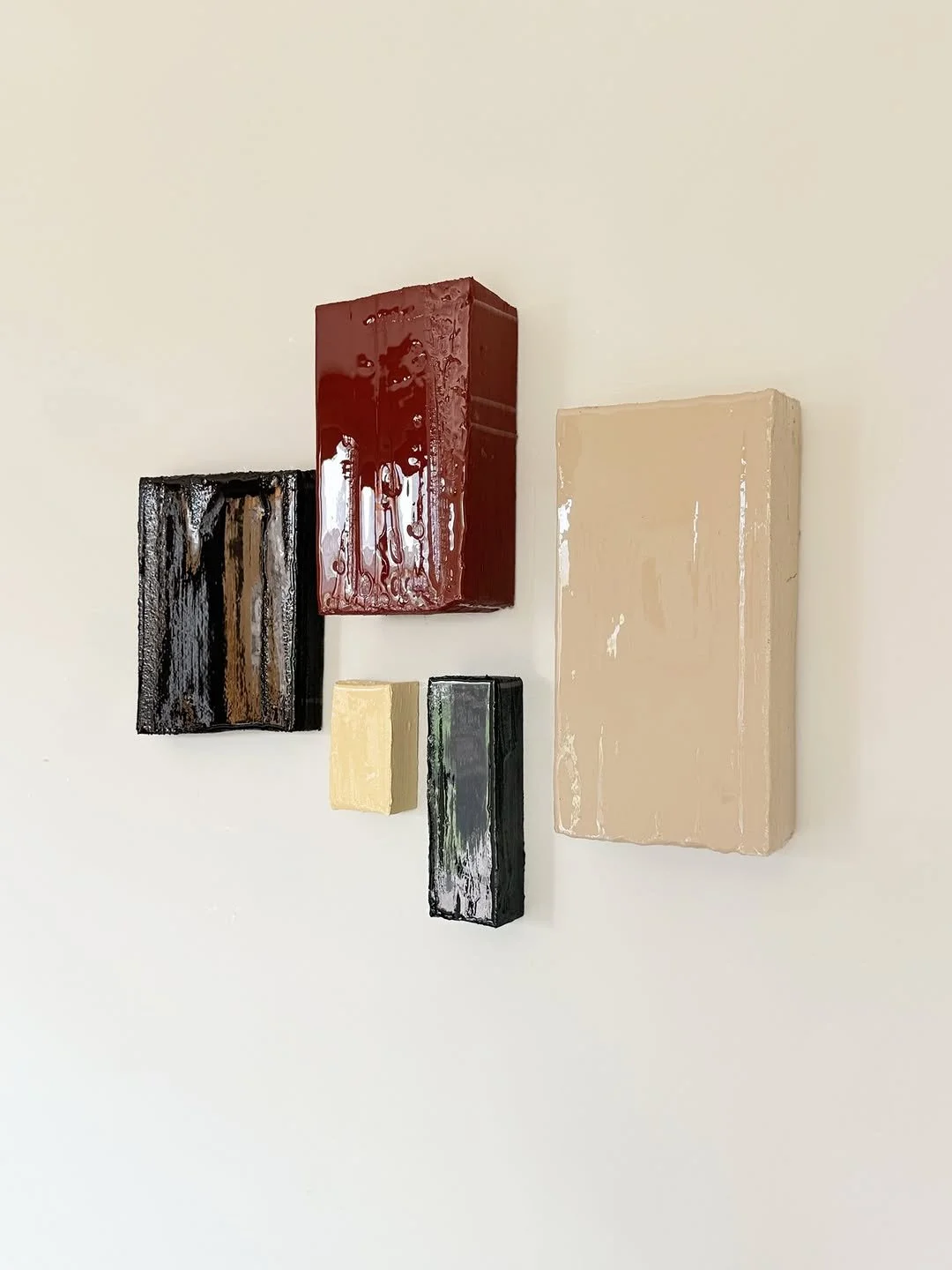
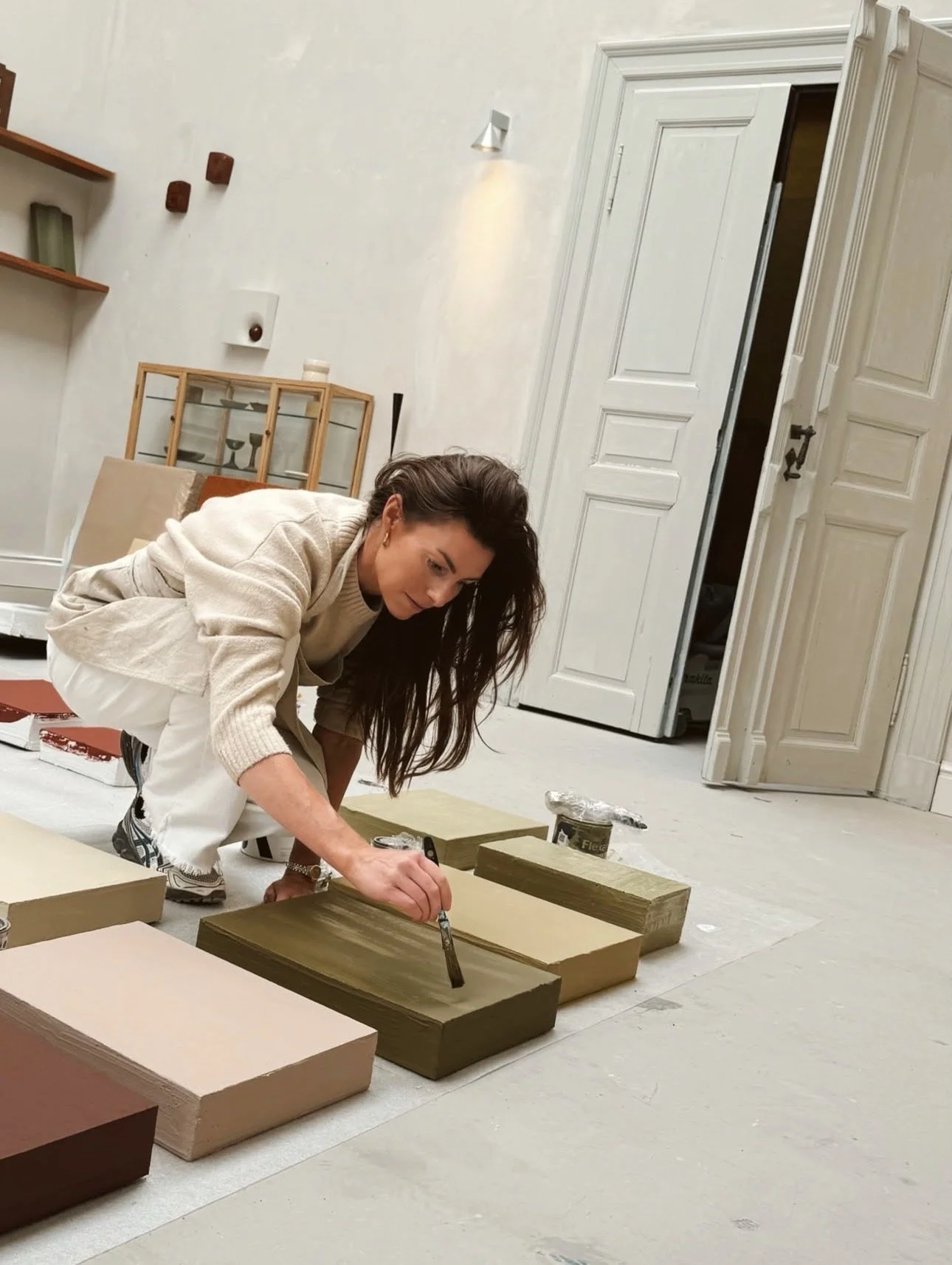
For Dutch designer and artist Edith Beurskens, sustainability begins with the material itself. Working at the intersection of digital innovation and traditional craftsmanship, she creates sculptural wall pieces using plant-based PLA, a biodegradable material derived from renewable resources such as maize, sugar beet and grain.
While her work initially appears ceramic or carved from stone, each piece is precisely 3D printed before being finished by hand with textured surfaces and earthy pigments. The result is a collection of tactile, organic forms that feel deeply connected to the natural world.
What makes Beurskens' practice particularly compelling is the dialogue it creates between past and future. Using contemporary fabrication techniques, she produces timeless forms that often sit within vintage or reclaimed frames, giving existing materials a renewed purpose while bringing heritage and innovation into conversation.
"Sustainable art isn't only about what we see. It's also about how it is made."
Ingrid Weyland: Making Environmental Impact Visible
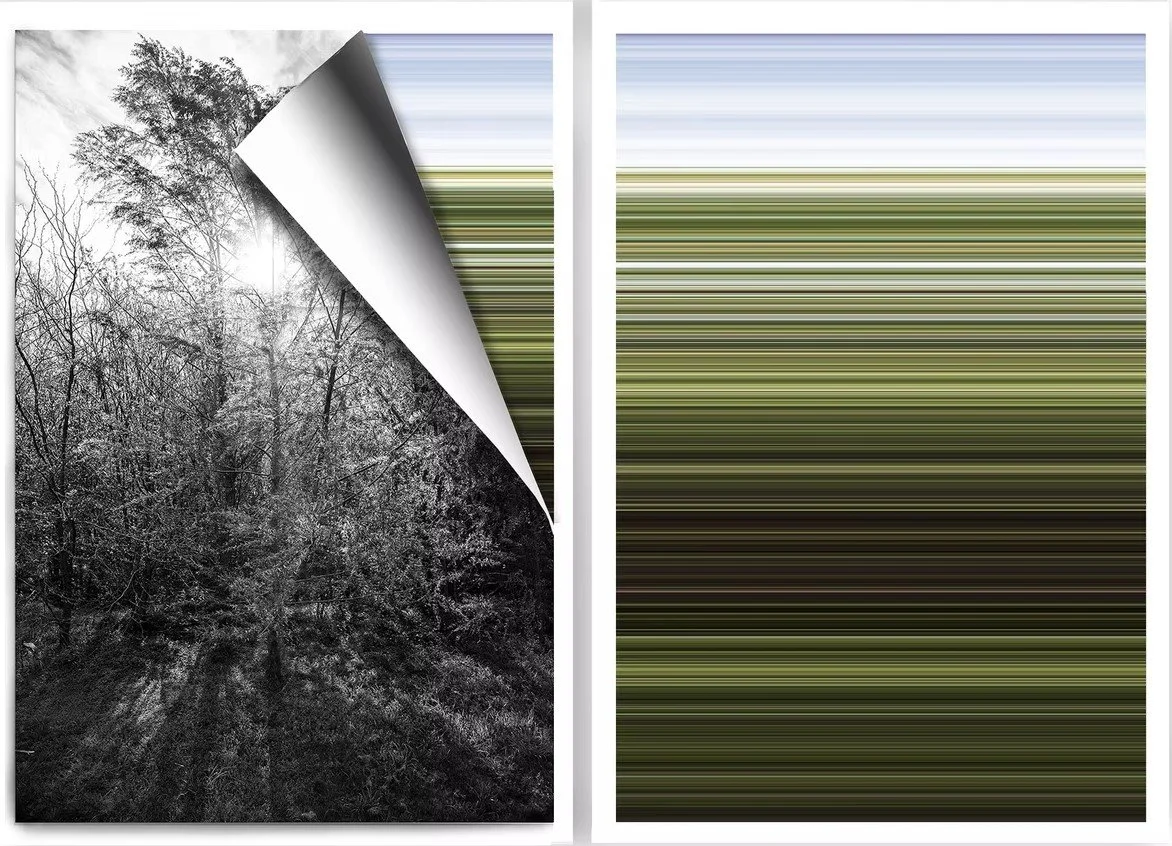
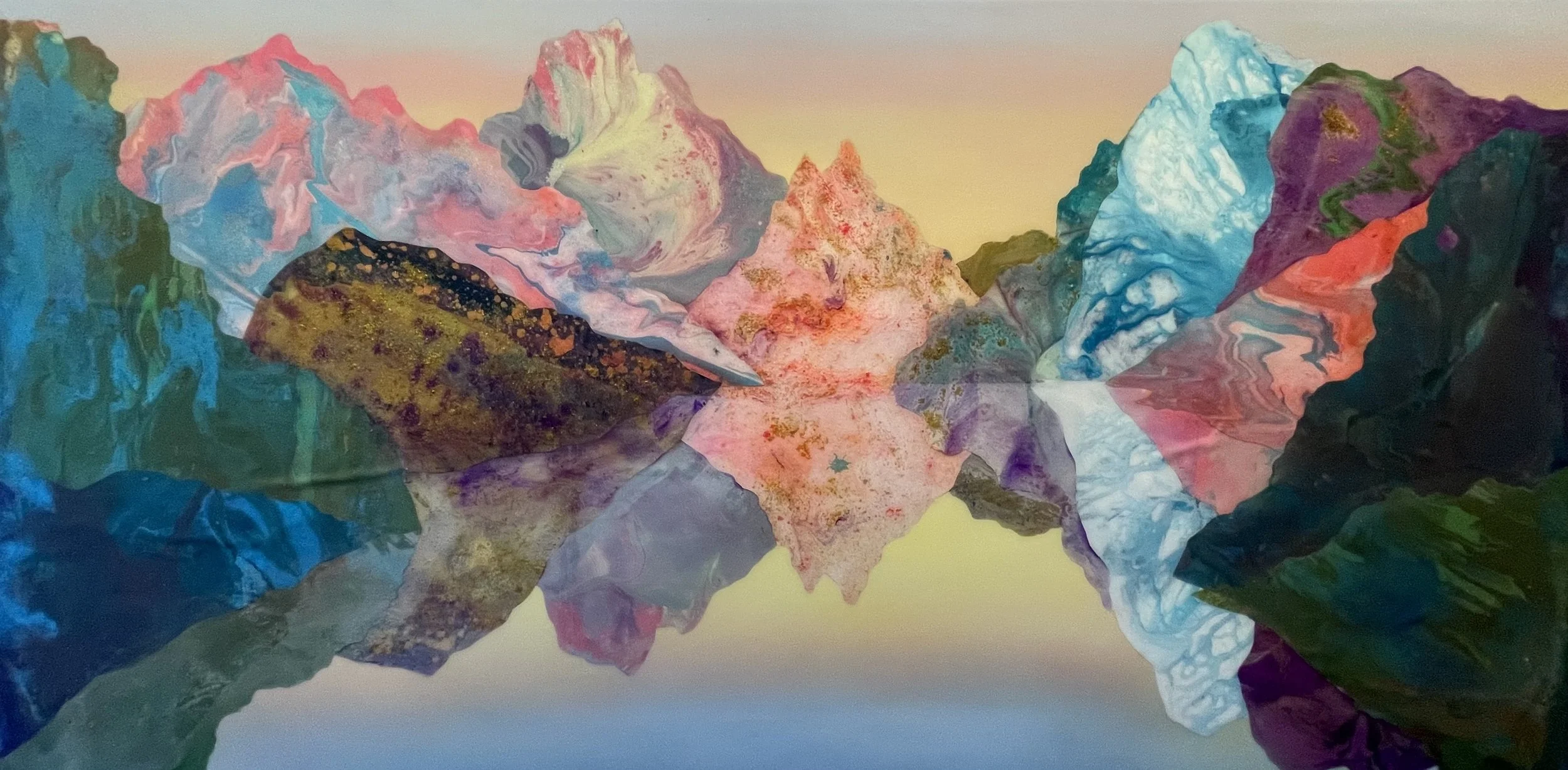
Argentinian artist Ingrid Weyland uses photography to explore the relationship between people and the natural environments they shape. Her acclaimed series Topographies of Fragility focuses on vulnerable landscapes, from glaciers to remote wildernesses, drawing attention to the very real pressures they face from climate change and human activity.
What makes the work distinctive is its material process. Weyland physically manipulates duplicate photographic prints, crumpling and distorting the surface before re-photographing the image. The resulting folds and ruptures become visual metaphors for environmental stress and fragility.
For workplace environments, works such as these offer more than aesthetic appeal. They create opportunities for reflection and conversation, helping organisations bring environmental themes into everyday spaces in a way that is subtle, thought-provoking and visually compelling
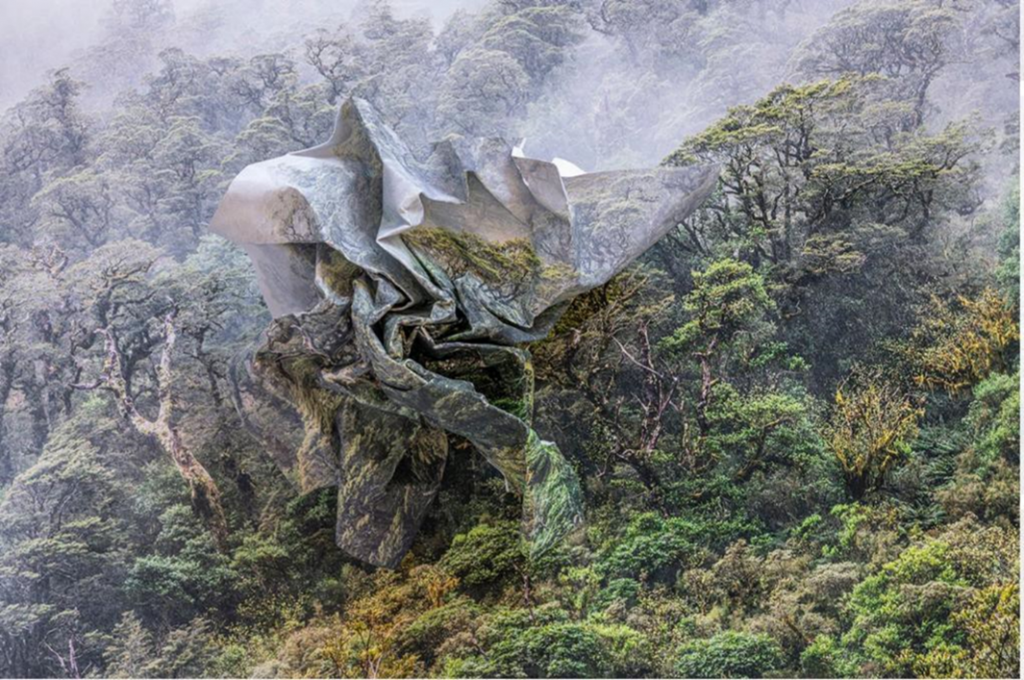
Topographies of Fragility
Sustainability Through Renewal
Not every organisation needs a major commissioned artwork programme to engage people with sustainability themes.
Sometimes the most effective approach is simply creating opportunities for ongoing discovery.
At Freshfields, Art Acumen developed two complementary approaches.
The first was the firm's permanent International Landscape Collection, comprising more than twenty paintings displayed across two client floors. Drawing together landscapes from around the world, the collection creates connections between people, place and environment, celebrating the richness and diversity of the natural world.
Alongside this sits an annual Works on Paper exhibition programme, introducing new artists, new perspectives and new conversations into the workplace each year. By regularly refreshing the collection, employees and visitors are continually exposed to different viewpoints, creative approaches and environmental narratives.
Together, the collections demonstrate that sustainability-themed workplace art does not need to communicate a single message.
Some works challenge us to confront environmental fragility and humanity's impact on the planet. Others gently nudge us towards a deeper awareness of landscape, ecology and our relationship with place. And some simply invite us to enjoy the sublime beauty of nature, creating moments of pause, reflection and restoration within the working day.
The programme also demonstrates the flexibility of temporary and evolving collections. These can range from a small selection of carefully curated works within a single workplace, to large-scale exhibition programmes spanning multiple floors, buildings or international locations.
For organisations looking to strengthen wellbeing, cultural or sustainability objectives, curated collections offer an accessible and scalable starting point. They allow workplaces to engage with important environmental themes whilst supporting artists and creating richer everyday experiences for the people who use the space.
Because sustainability is not always about telling people what to think.
Sometimes it is about giving people the opportunity to stop, look, reflect and reconnect with the world beyond the workplace.
Art as a Sustainability Asset
The examples in this article take very different forms.
The collective storytelling behind Osborne Clarke's Decarbonisation Journey.
Lisa Marie Price's hand-made natural pigments.
Edith Beurskens' use of plant-based materials and contemporary fabrication techniques.
Freshfields' evolving programme of temporary exhibitions and landscape collections.
Yet they all point towards the same idea.
Sustainability is not simply about reducing impact.
It is about shaping relationships.
Relationships between people and place.
Between organisations and their values.
Between the spaces we create and the futures we hope to build.
For architects, workplace strategists and corporate occupiers, this presents an opportunity.
Art can contribute far more than visual enhancement. When considered strategically, it can support sustainability ambitions, strengthen cultural narratives and help people connect with the ideas that are shaping the future of work.
The most successful sustainability initiatives do not only inform.
They engage.
They inspire.
They invite participation.
And perhaps that is where art has its greatest value.
Not as decoration.
Not as an afterthought.
But as a catalyst for engagement.
Targets change organisations. Stories change people.
We work with organisations, designers and workplace teams to commission artwork and engagement programmes that support sustainability ambitions through responsible materials, meaningful participation and long-term cultural value.
If you're rethinking the role of art within your workplace, we'd love to start a conversation.
Explore our Sustainable Art approach
View our recent projects
Get in touch