
Lisa Marie Price
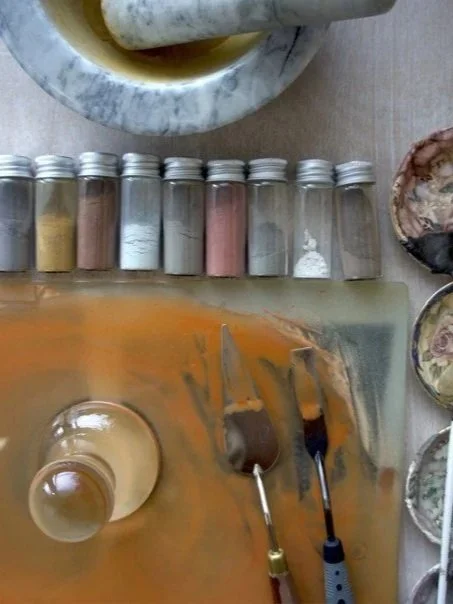
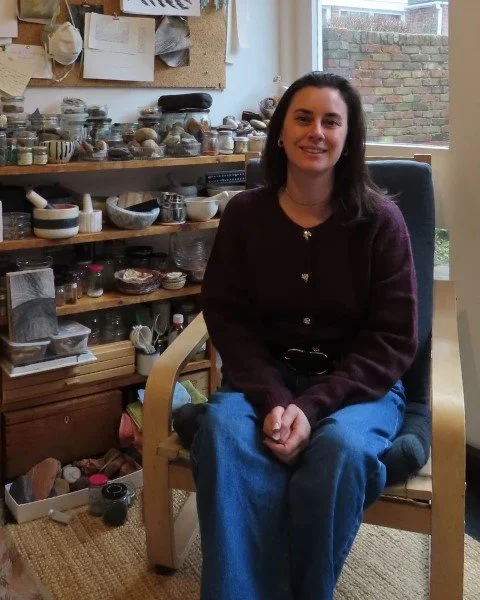
We recently had the pleasure of visiting Lisa‑Marie Price in her studio for a conversation that offered a rare glimpse into the quiet depth and intention behind her practice. Known for her use of hand‑made natural pigments and her commitment to sustainability, Lisa’s work invites us to slow down, pay attention and reconnect with the subtleties of the natural world.
In this interview, she speaks candidly about the shift that led her towards a more eco‑conscious way of working, the meditative nature of her process, and the importance of “quiet art” in an increasingly noisy world. From collecting rocks on windswept coastlines to grinding pigments by hand, her practice is as much about presence and observation as it is about painting.
The full transcript below captures her thoughtful reflections on influence, materiality, and the evolving relationship between art, nature and sustainability
.
Q: What are your main influences for your work?
Lisa: I would say my love for nature and the world in general. About seven or eight years ago I went vegan and changed a lot in my home, but nothing in my studio. I realised my practice wasn’t reflecting how my values had shifted. That’s how I got into creating my own paints from natural pigments.
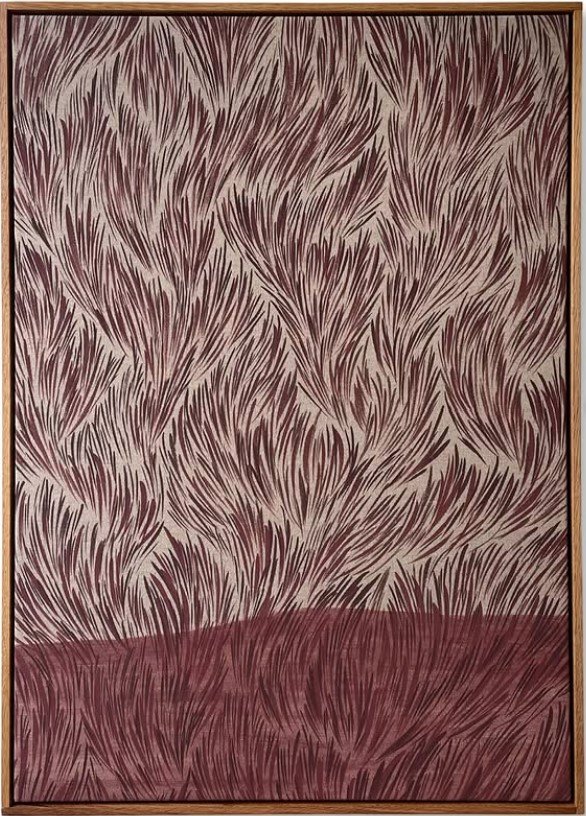
My main inspiration is noticing the small things in nature that make you pause for a moment — an interesting cloud formation, the wind rustling through grass, simple things. We’re all so busy, everything is getting faster, and we don’t take time to slow down and notice. I usually go out, take photos, spend time in nature, appreciate it, and then come back to sketch in the studio rather than sketching outside.
I don’t think I have standout artists whose work directly reflects how I paint, but there are artists who’ve influenced me over the years. Bridget Riley, for example — I love her attention to detail and how bold her work was, especially as a woman in the art world. Ina Hess too, whose work is very different from mine, but there are small things in people’s practices that stay with you. Ultimately, though, it’s my surroundings — the world, nature, and the underappreciation of what we have. I read a lot about sustainability, climate change, and how we treat our land, and that influences what I make.
Q: Was becoming vegan the moment your practice shifted toward sustainability?
Lisa: That’s when everything changed. Before that, I was teaching and painting but hadn’t really found what I wanted to say. I’ve always been creative, but my work didn’t feel meaningful — it was a bit here and there.
I started reading about animal welfare, land protection, climate change, and environmental issues, and that shifted everything. Before making my own paints from earth minerals, I made inks from organic materials — berries, leaves, things I found outdoors. But the process was slow and energy‑intensive; you have to boil everything for hours. It didn’t align with the sustainability I wanted. So I moved into pigment making. There are lots of people in that field who were incredibly helpful. That’s when I found my voice. My work has evolved, but the core values are still the same.
Q: Do the pigments you find influence what you end up painting?
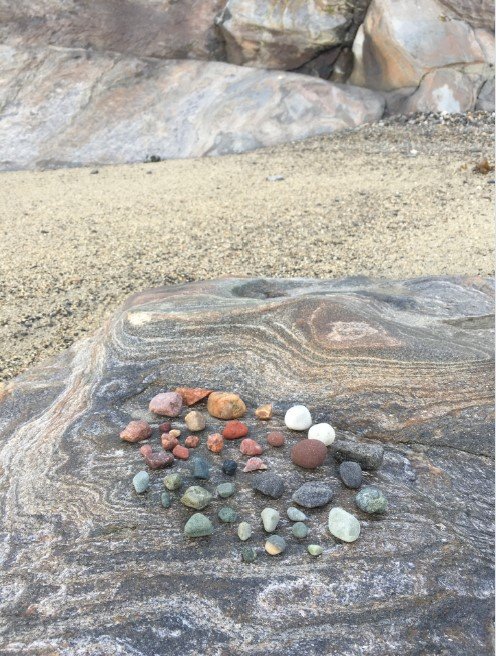
Lisa: Yes, I go with what I find. Over time I’ve built up quite a collection — probably over 200 pigments, though many are variations of the same colour. The inspiration starts when I’m collecting. Now that I have a larger collection, I could make a series in a specific colour range, but I don’t tend to work that way. I choose colours instinctively.
I’m meticulous about keeping track of where everything is from. If I forget to label something, it really frustrates me. On the back of my paintings I write the title, my signature, and all the pigments used — for example, “black sea coal from the Isle of Mull.” It adds to the story.
For commissions, sometimes people collect rocks themselves. A family once collected rocks on their favourite walk, sent them to me, and I made a painting from their pigments. For site‑specific projects, I’ll even ask builders for bits of brick or earth they’ve dug up. It ties everything together.
Q: What challenges come with using exclusively natural pigments?
Lisa: One challenge is simply not having every colour. Some pigments come from places I can’t easily access. There are places in America with beautiful rich red soil — you can get similar colours here, but it’s not the same.
Another challenge is tonal balance. Some pigments can feel very similar, so it’s about finding new inspiration with materials I’ve used before and discovering new ways to combine them.
Also, watercolour on linen isn’t how most people use watercolour. Recently I’ve been learning how to build layers on linen, how to work with the absorbency and texture. It’s a different way of working.
Q: Does making your own paints make you feel more connected to your work?
Lisa: Completely. I don’t think I could walk into a shop and buy a tube of paint now. I wouldn’t even know where to start. There’s no inspiration in that for me. Making the paint gives me time to think, to build ideas. I’d struggle to go straight into painting without that process.
Q: Was becoming vegan the moment your practice shifted toward sustainability?
Lisa: That’s when everything changed. Before that, I was teaching and painting but hadn’t really found what I wanted to say. I’ve always been creative, but my work didn’t feel meaningful — it was a bit here and there.
I started reading about animal welfare, land protection, climate change, and environmental issues, and that shifted everything. Before making my own paints from earth minerals, I made inks from organic materials — berries, leaves, things I found outdoors. But the process was slow and energy‑intensive; you have to boil everything for hours. It didn’t align with the sustainability I wanted. So I moved into pigment making. There are lots of people in that field who were incredibly helpful. That’s when I found my voice. My work has evolved, but the core values are still the same.
Q: Where do you source the rocks and materials you use to make your paints?
Lisa: All the rocks I use are either ones I’ve found myself or ones people have gifted me. I know it sounds a bit bonkers, but I do get rocks in the post. A friend went to Morocco and sent me indigo and a rock she found. That’s a special part of my practice — it’s not just my story, but other people’s stories too.
I’m careful about what I take: only small amounts, only loose rocks, never breaking anything off. I document where they come from so when I’m painting, I know the place, the feeling, the moment. Each place has its own palette. Most of my pigments are from the UK, but I have some from further afield. I’m going to Greece for a residency in March and I’m excited to explore — they have beautiful pastel earth pigments.
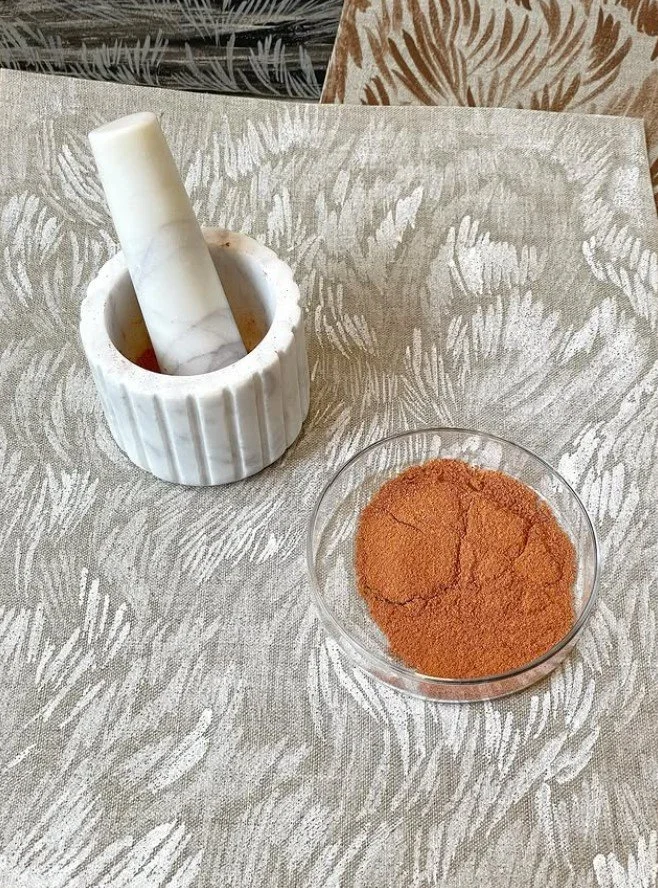
I don’t buy pigments. My work starts when I collect the rocks. From collecting, to crushing them by hand, to making the paint, to painting — it’s all part of the process. I don’t think I could go back to buying tubes of paint. The slow build‑up gives me thinking time. I love that it’s slow.
We can have anything we want instantly now — you can order something and have it by tonight. But with pigments, it’s left to chance. I can’t have every colour whenever I want, and that influences what I paint. Each pigment behaves differently — chalk feels different from slate or harder rocks. It’s all part of the process.
Q: Your work is very eco‑conscious. Is that the main message behind it?
Lisa: It’s a big part of it, but it’s also about slowing down. I want to speak for the quiet art. There’s so much noise — in life and in the art world. At big exhibitions, my work can get lost because it’s quiet. But now I think maybe we need quiet. Maybe we need to slow down, observe, pay attention.
The sustainability side reflects how I feel about life. It will always be part of my work. There’s a lot happening in the world that feels chaotic, and maybe my work is a counterbalance — a peaceful space.
I think people are more open to quieter work now. Five years ago, maybe not. But there’s more awareness about the planet, about how we behave and what we buy. My message hasn’t changed much — people have just become more familiar with it.
Q: Your paintings feel meditative. Is the process meditative for you?
Lisa: Completely. The painting and the paint‑making. I don’t always work in silence — I usually have a podcast or quiet music on. I can’t listen to loud, upbeat music; it would change the flow of the work. Sometimes I realise I haven’t listened to a word of the podcast because I’ve zoned out. There’s a peacefulness in the process, especially with natural pigments.
Q: Thank you so much for your time.
Lisa: Thank you.