Nadia Attura
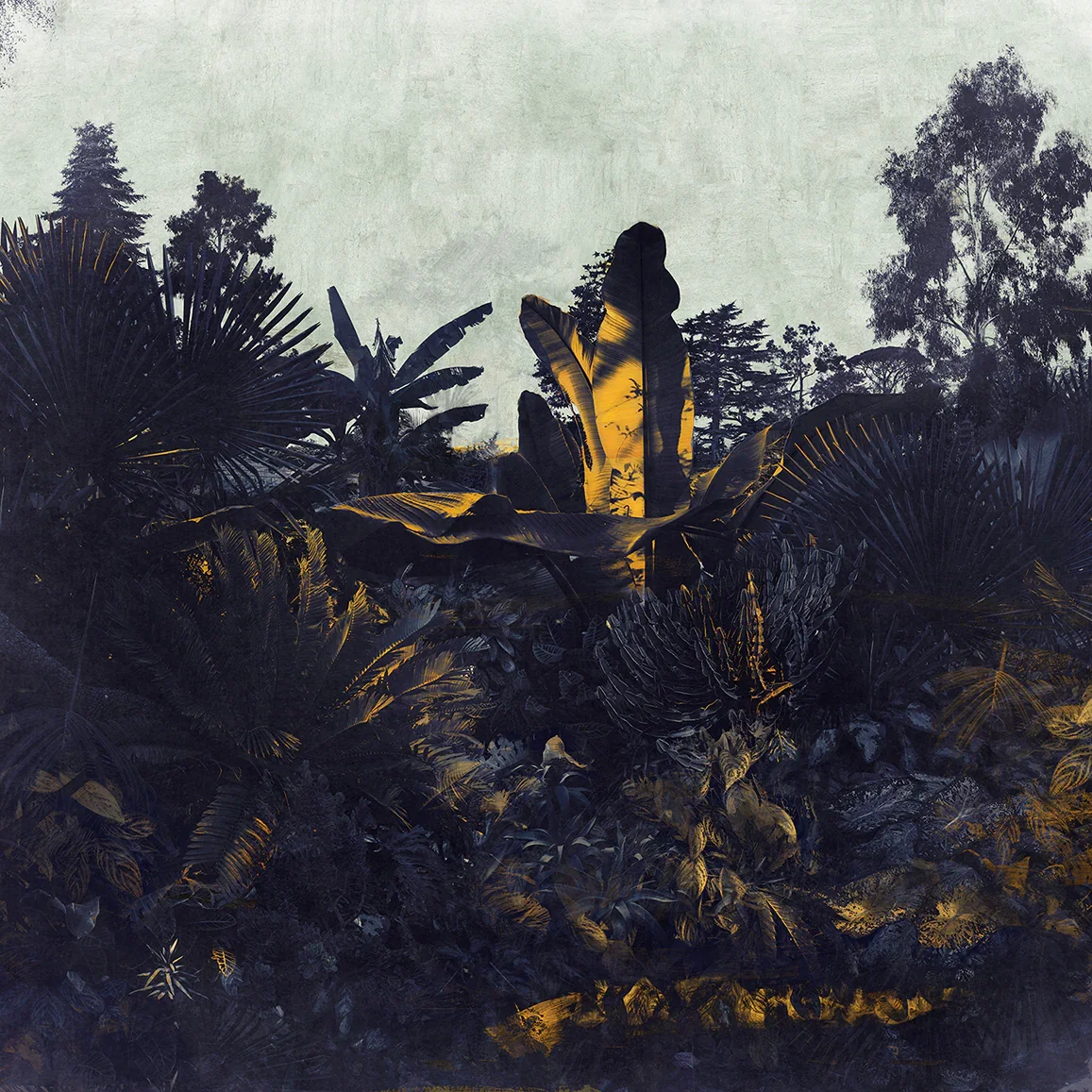
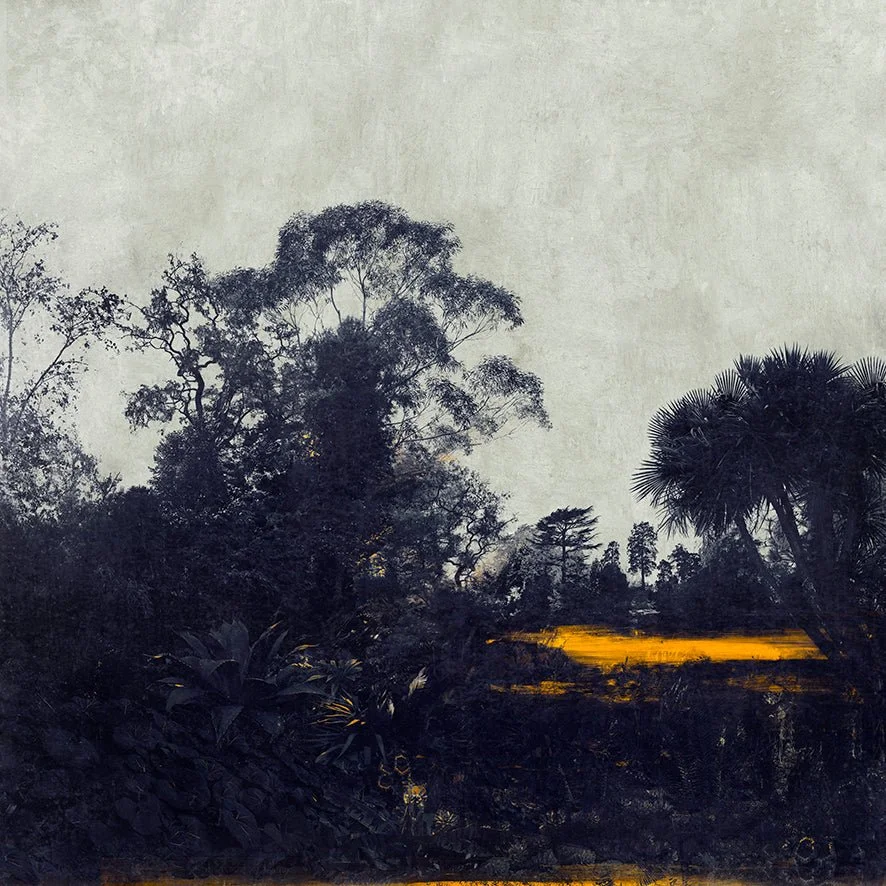
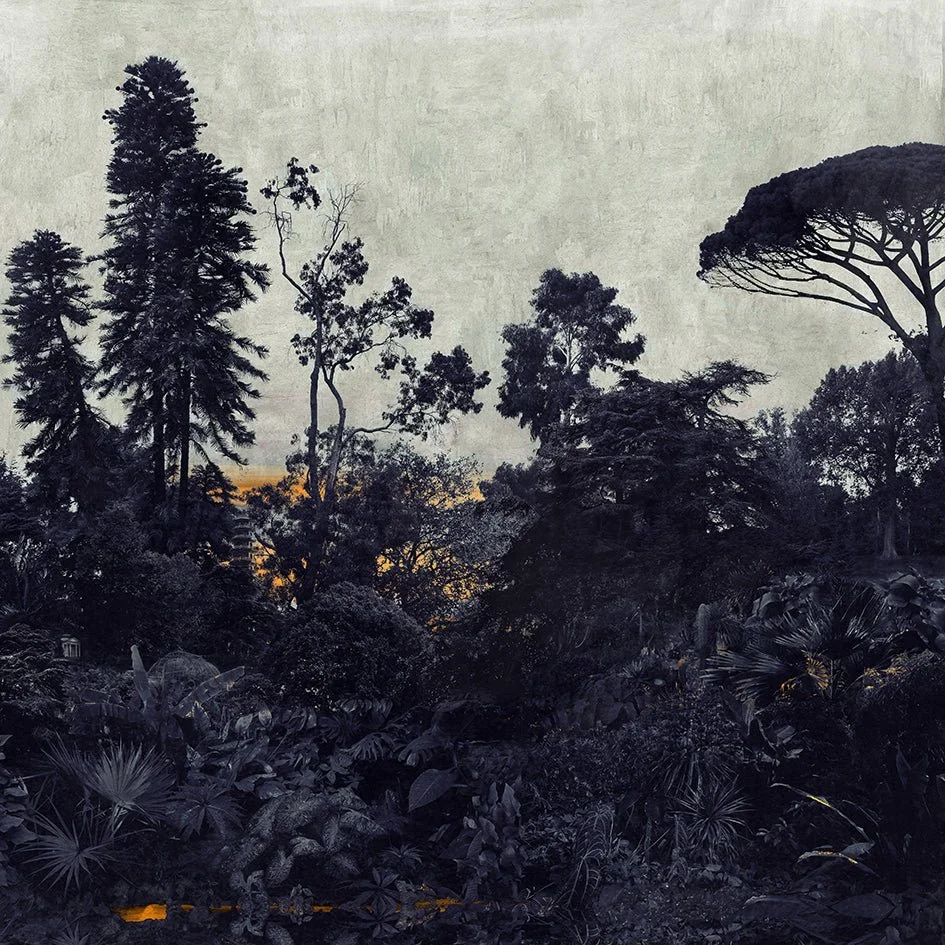
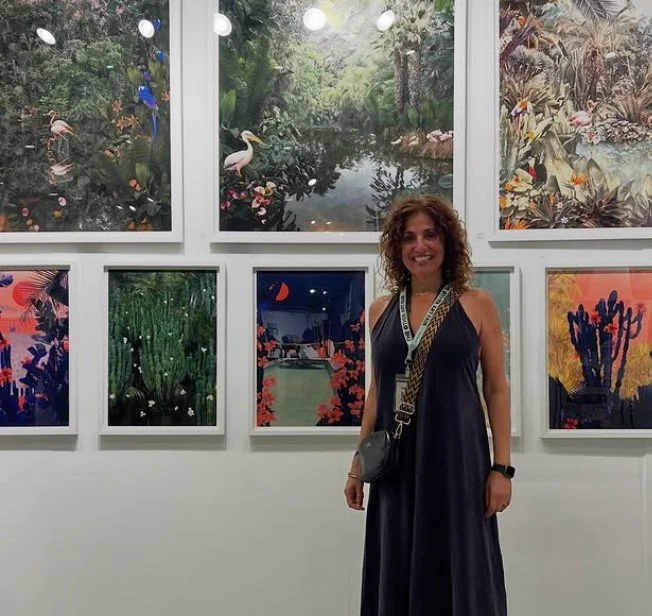
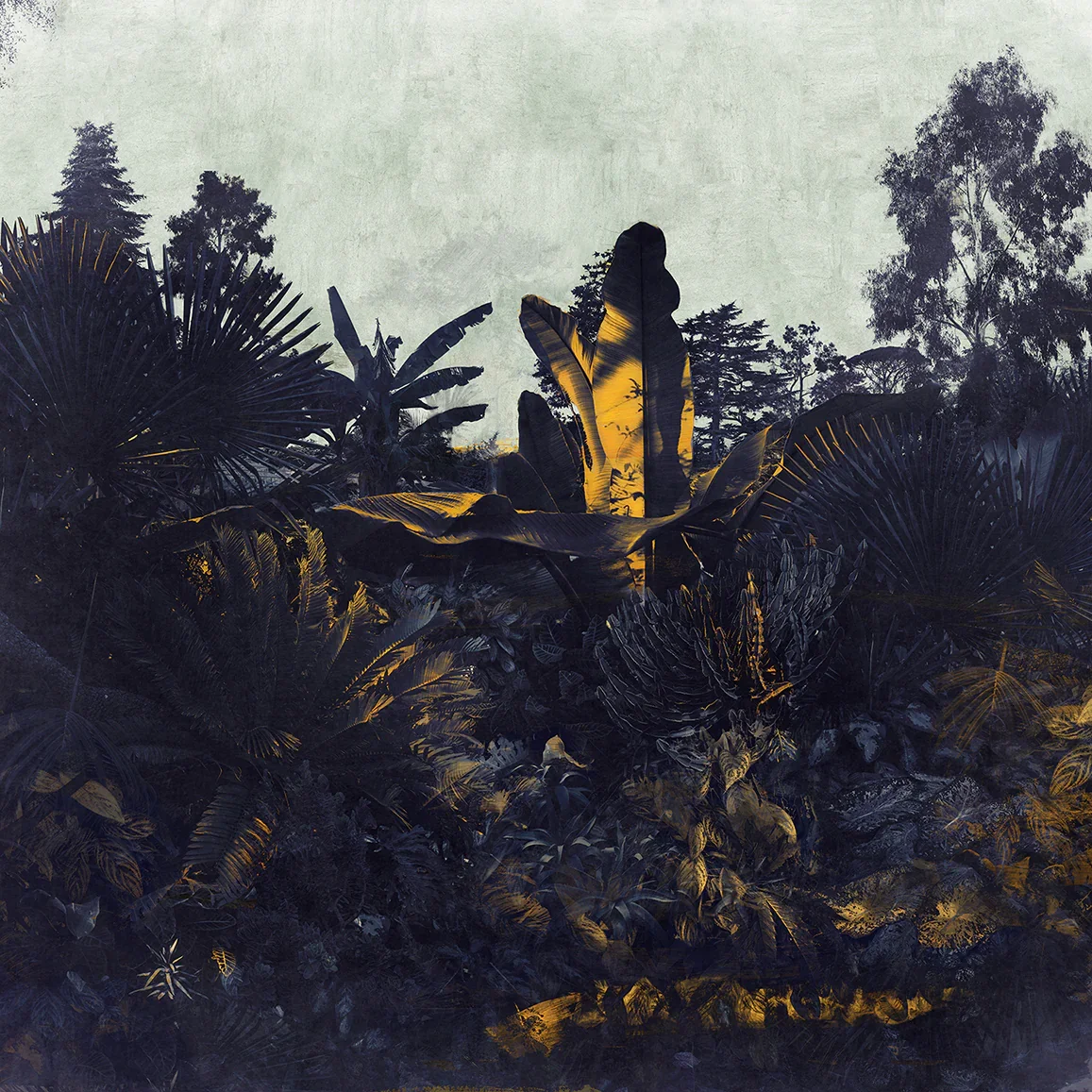
Nadia Attura’s Kew Gardens series forms a contemplative body of work within her wider Botanical series, rooted in sustained visits to the Royal Botanic Gardens at Kew and shaped by a practice that carefully balances observation and imagination. Drawing from her own photographs taken on location within the garden, Attura constructs works that move beyond documentation toward an experiential reimagining of place.
The artist’s process is central to the series. Attura begins with original photographs, which are printed, collaged, and reassembled in the studio. Onto these photographic foundations she adds paint, chalk, ink, and drawn elements, gradually building richly textured, editioned compositions. This layering introduces an illustrative quality that dissolves strict photographic realism, allowing the works to occupy a space between the real and the remembered.
In the Kew Gardens works, botanical forms are not treated as isolated specimens but as part of immersive, living systems. Lagoons, lakes, and dense plant groupings recur throughout the series, evoking the gardens as spaces of refuge and contemplation. Attura reshapes perspective and scale, guiding the viewer through layered foregrounds and softly receding backgrounds that suggest both intimacy and expanse.
SELECTED EXHIBITIONS:
Royal Academy Summer Exhibition, Royal Academy of Arts, London, UK, 2025
Royal Academy Summer Exhibition, Royal Academy of Arts, London, UK, 2024
Royal Academy Summer Exhibition, Royal Academy of Arts, London, UK, 2023
Royal Academy Summer Exhibition, Royal Academy of Arts, London, UK, 2019
Royal Academy Summer Exhibition, Royal Academy of Arts, London, UK, 2016
The Affordable Art Fair, Battersea, London, UK
The Other Art Fair, London, New York, Los Angeles and Chicago
Miami Scope Art Fair, Miami, USA
Fresh Art Fair, Alexandra Palace, London, UK
AWARDS:
First Prize, Italian Cultural Institute Photography Award, 2012
Finalist, Visual Arts Open (VAO), UK
EDUCATION:
Postgraduate Diploma in Photojournalism,
The London College of Printing (University of the Arts London), 1999
Nadia lives and works in London.
“I don’t go to Kew to document it, I go there to slow down, to notice how light moves through water and leaves, and to let those fragments stay with me. The garden feels like a place of refuge, somewhere between what’s cultivated and what’s wild. I start with photographs, but back in the studio I’m working from memory as much as from what I saw, letting the original image dissolve through layers of paint, chalk and ink. I’m interested in how a place feels after you’ve left it, when it’s softened by time. If someone can lose themselves in that quiet space for a moment, then the work has done what I hoped.”
Interview: