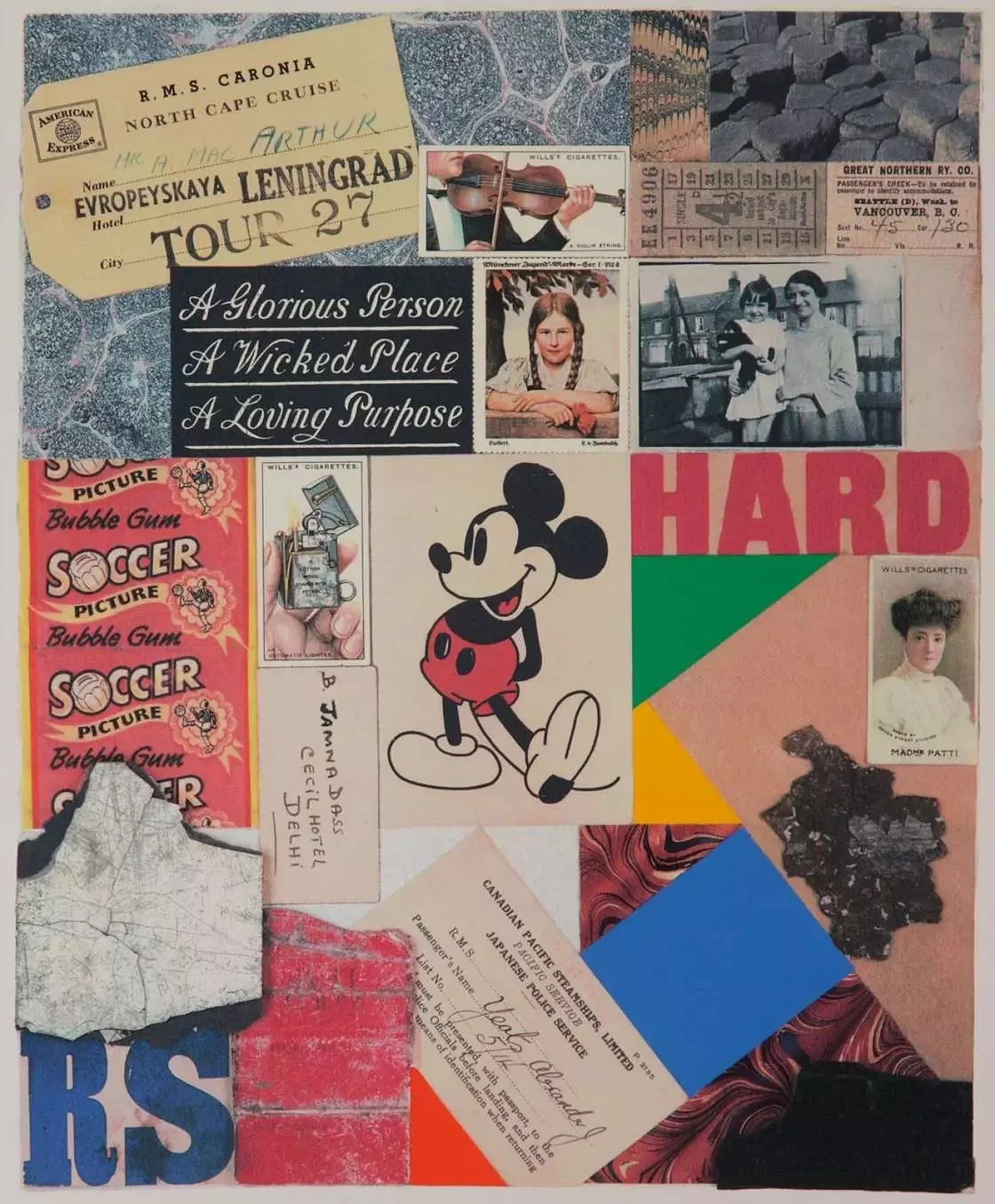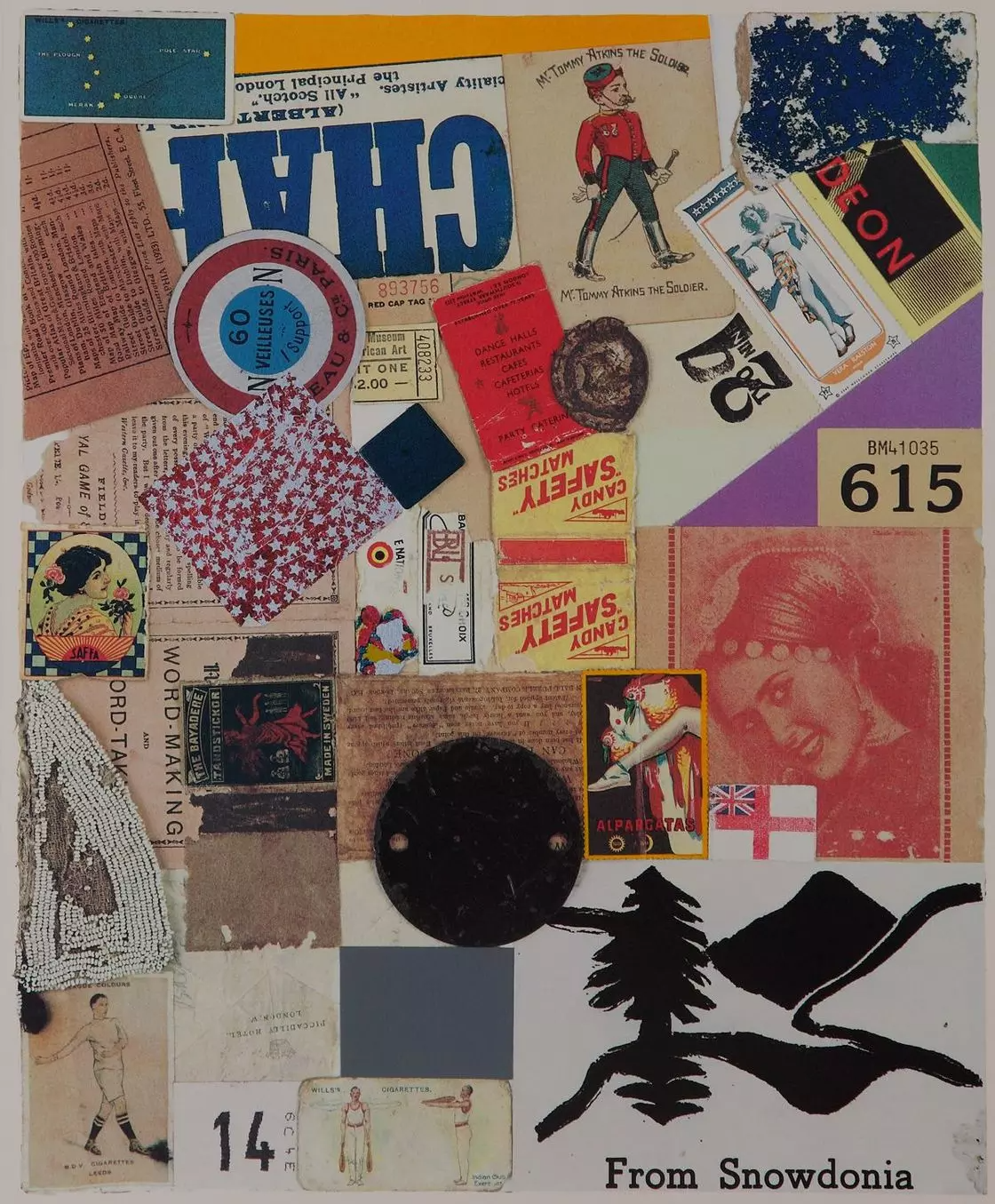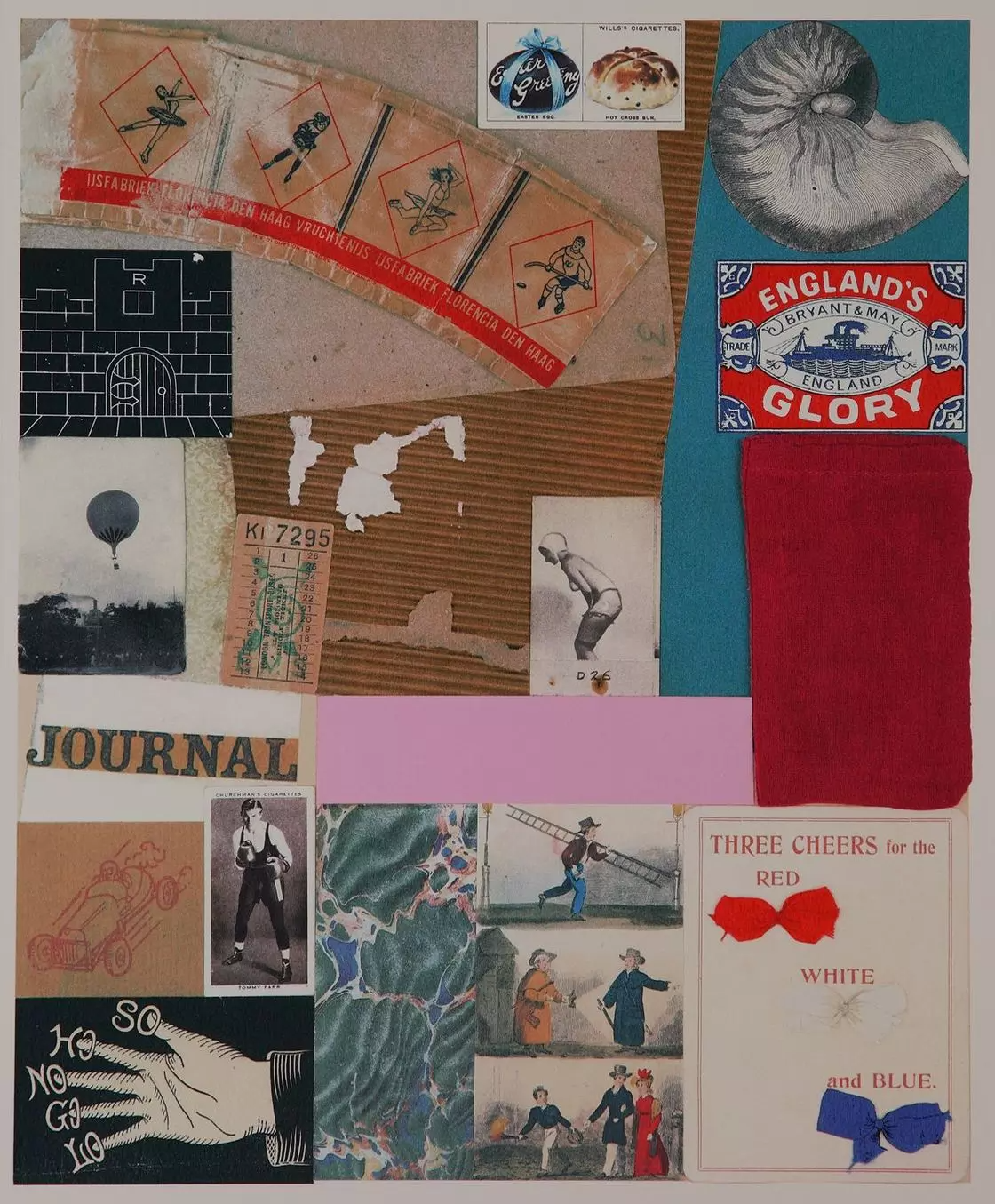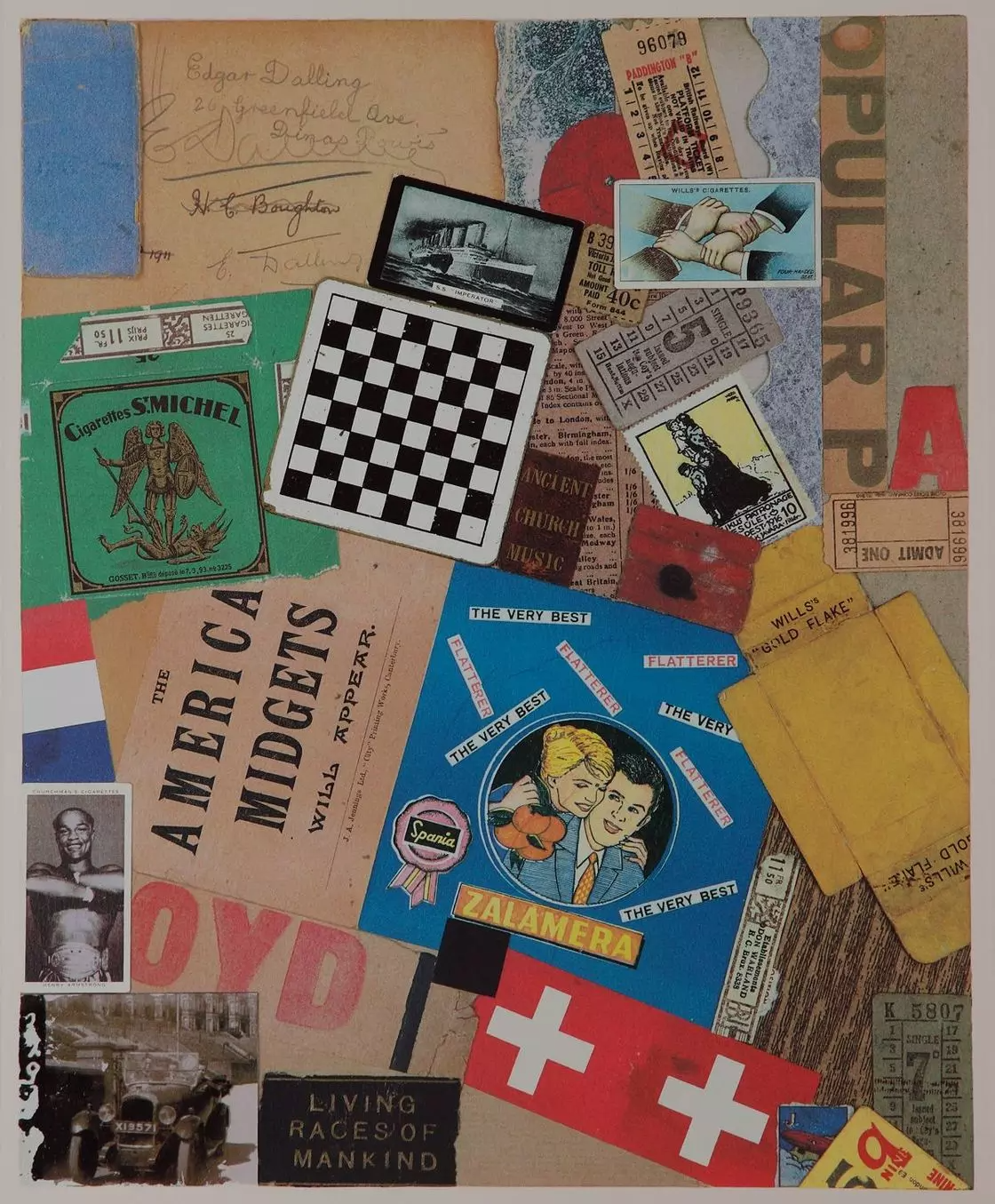
Rooted in a lifelong fascination with the imagery of popular culture, Peter Blake forged a practice that moves between painted collage, assemblage, printmaking and portraiture, transforming mass‑media icons, folk traditions and everyday objects into a distinctive and deeply influential visual language.
Peter Blake
Born in Dartford, Kent in 1932, Blake became a leading figure of the British Pop scene in the 1960s, shaping a specifically British counterpart to the predominantly American movement. After completing national service with the Royal Air Force, he enrolled at the Royal College of Art, studying alongside David Hockney, R.B. Kitaj and Joe Tilson. It was during these formative years that Blake began mining the imagery of advertising, magazines, wrestling culture and music‑hall entertainment, producing painted collages and constructions that captured the textures and aspirations of post‑war Britain.
Throughout the 1960s, Blake’s practice expanded in ambition and visibility. Early works such as On the Balcony demonstrated his ability to translate the appearance of collage into meticulously painted surfaces, while his deep engagement with popular culture culminated in one of the most iconic images of the 20th century: the cover for The Beatles’ Sgt. Pepper’s Lonely Hearts Club Band (1967). A long‑time aficionado of wrestling, Blake painted portraits of his favourite athletes and collected posters, dolls and dioramas, building an archive that fed directly into his art. His work from this period — playful, democratic and sharply attuned to the visual rhythms of everyday life — positioned him at the forefront of a new artistic sensibility.
By the late 1960s and 70s, Blake’s practice shifted again. After moving from London to Bath in 1969, he became increasingly inspired by English folklore, Shakespearean characters and Victorian illustration. Works such as For instance now, now there’s the King’s messenger reveal a more narrative, literary dimension, while his continued interest in collage and assemblage remained central to his evolving aesthetic. Across these decades, Blake’s work was widely exhibited: he won the John Moores junior award in 1961, appeared in landmark exhibitions such as British Art Today and London: The New Scene, and was the subject of major retrospectives at Tate Gallery (1983) and Tate Liverpool (2007).
In the 21st century, Blake has continued to reinvent his practice while maintaining the eclecticism that has defined his career. Knighted in 2002 for his services to art, he has produced new series that revisit and expand his long‑standing interests — from portraits of Queen Elizabeth II and Meghan Markle to the Girl with a Disney Tattoo paintings made during lockdown, and the narrative collage series Joseph Cornell’s Holiday. His work remains rooted in a fascination with popular culture, history, music, film and celebrity, drawing equally on folk art, Victoriana and counterculture. Exhibited internationally and held in major museum collections, Blake’s oeuvre stands as a testament to a lifelong belief in the imaginative potential of the everyday image, and to an artistic vision that continues to shape — and expand — the possibilities of Pop.

Interview:
“Right from the start, I painted the things I was interested in, from comics and music to film stars and fairground people, and that’s what led into pop art.”