Tom Phillips (1937–2022) was a visionary British artist whose boundary‑crossing practice spanned painting, drawing, printmaking, sculpture, music and writing. Born in London, he studied English at St Catherine’s College, Oxford while training in drawing at the Ruskin School, later continuing at Camberwell under Frank Auerbach. By the mid‑1960s he was exhibiting widely and teaching at leading British art schools, establishing himself as a central figure in postwar British art.
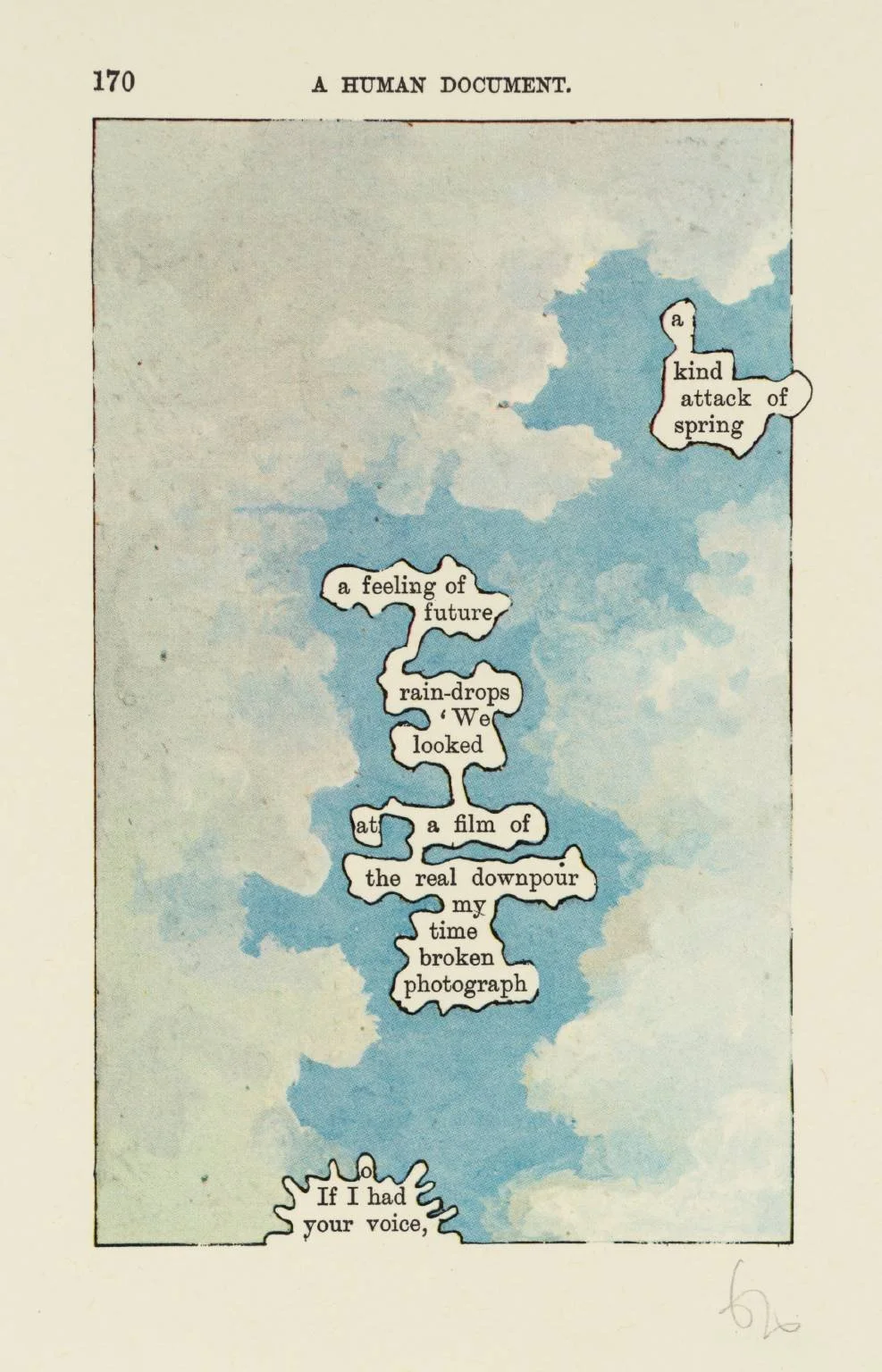
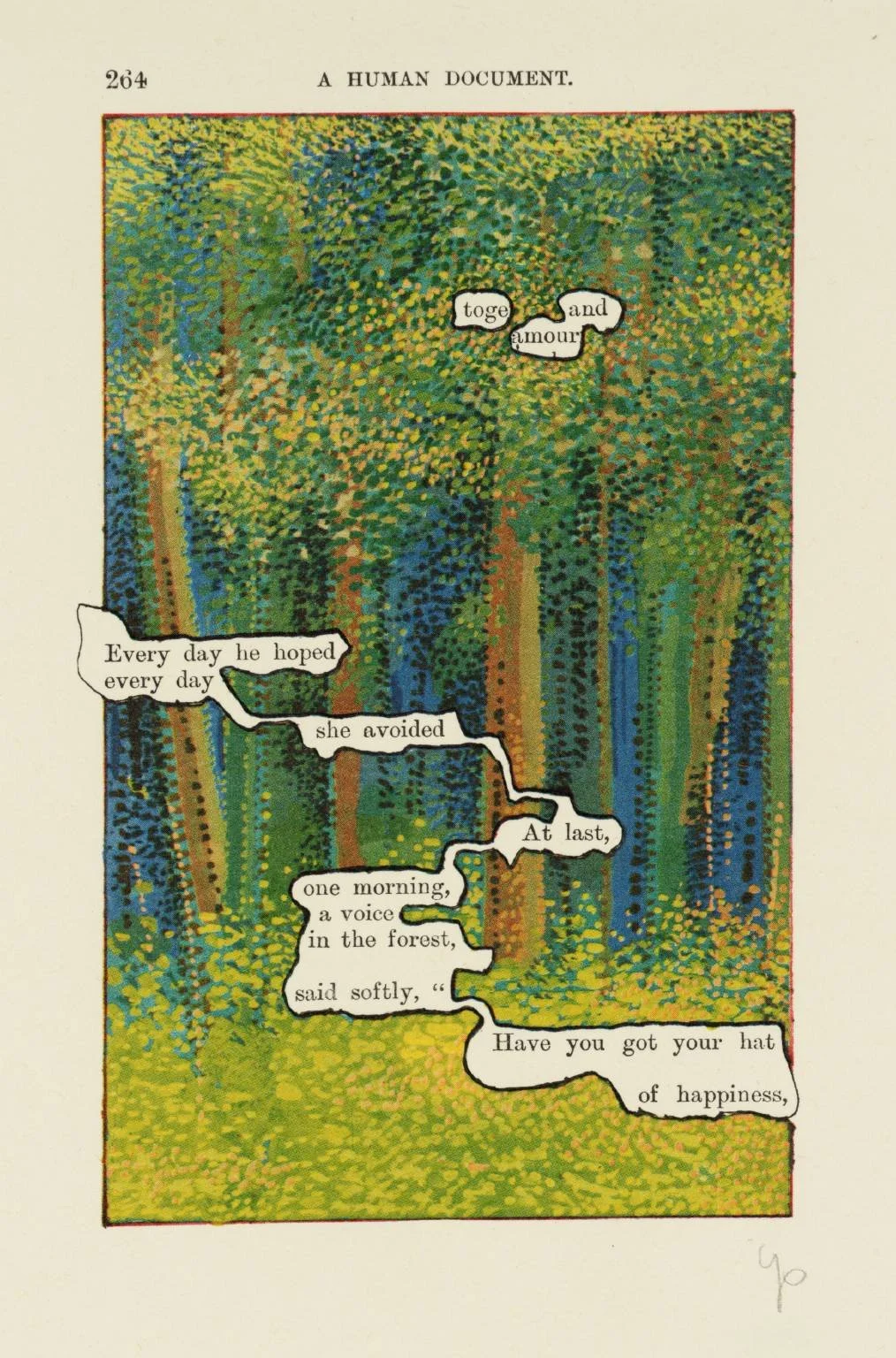
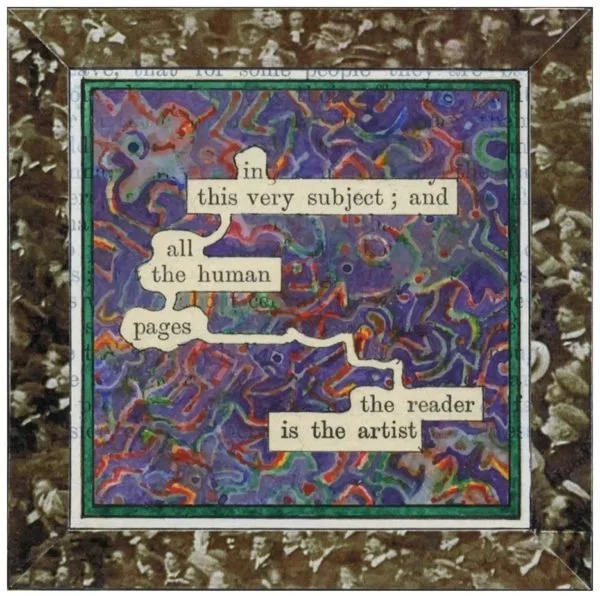
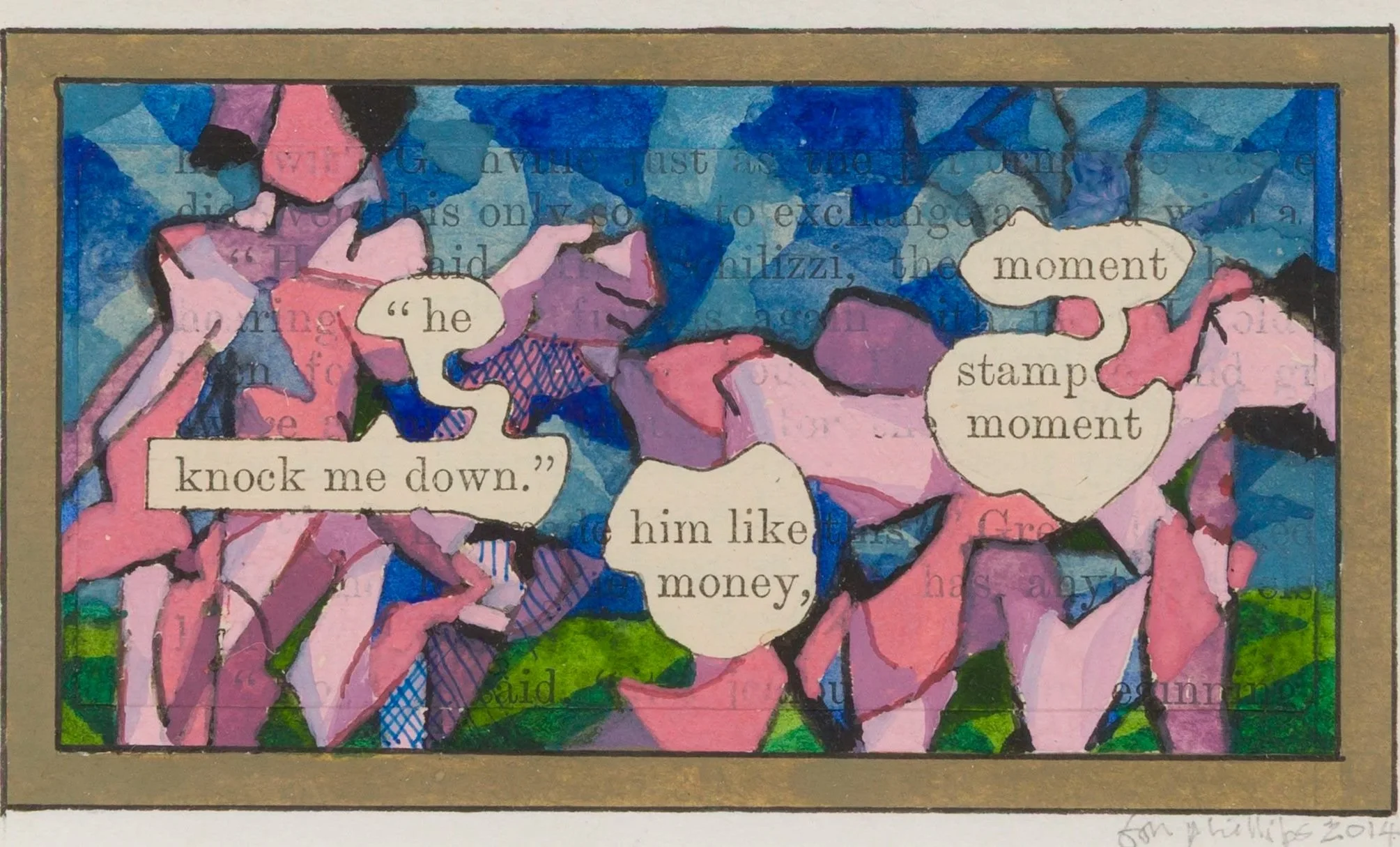
Phillips is best known for A Humument, his radical lifelong transformation of W.H. Mallock’s A Human Document. Begun in 1966 after he vowed to remake the first cheap book he found, the project evolved over fifty years into a landmark of treated‑book art - each page reimagined through collage, overpainting, cut‑up text and visual invention. Exhibited in full at the ICA in 1973 and completed in its sixth and final iteration in 2016, A Humument stands as one of the most sustained and influential serial artworks of the 20th century.
Rooted in a lifelong fascination with the infra-ordinary, Tom Phillips reconfigured the materials of daily life into complex systems of meaning - experimenting with chance, repetition, and textual fragmentation.
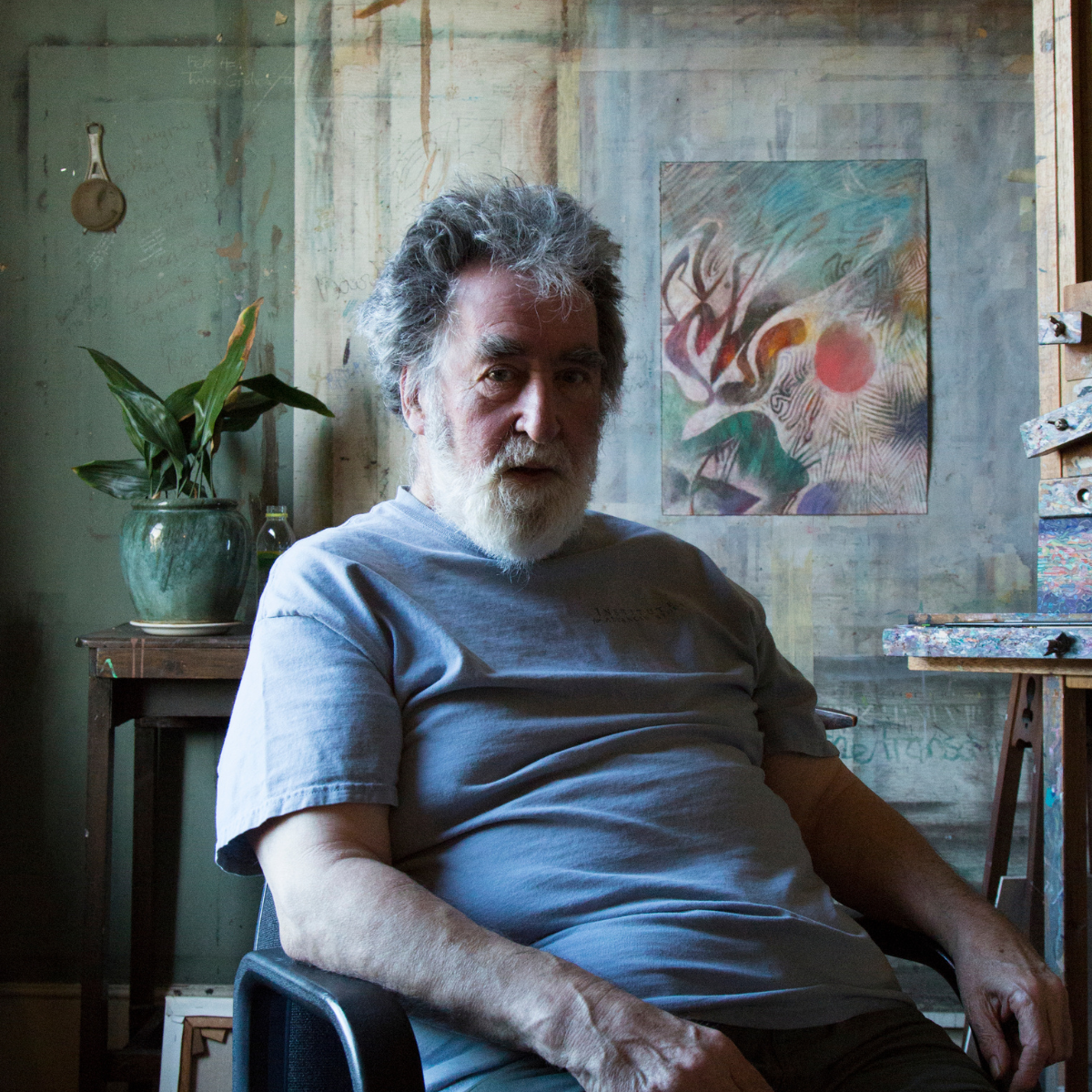
Tom Philips
Alongside this epic undertaking, Phillips developed a prolific and multifaceted career. He created acclaimed illustrations—including a prize - winning translation and visual interpretation of Dante’s Inferno - and collaborated with Peter Greenaway on a television adaptation that won the Italia Prize. His portraiture, held in the National Portrait Gallery, includes sitters such as Iris Murdoch, Samuel Beckett and Brian Eno. His musical compositions, including the opera Irma, were performed internationally.
Phillips also shaped British cultural institutions as a curator, trustee and academic. Elected to the Royal Academy in 1984, he chaired its Exhibitions Committee and curated the landmark show Africa: The Art of a Continent (1995), which travelled to Berlin and the Guggenheim, New York. He served as a trustee of both the National Portrait Gallery and the British Museum, and was appointed CBE in 2002 for services to the arts.
His public commissions - ranging from tapestries and mosaics to sculptural works for sacred and civic spaces- are embedded across the UK. In his later years, Oxford’s Bodleian Library acquired his extensive archive, including his celebrated postcard collection.
Tom Phillips lived and worked in London throughout his life. His studio on Talfourd Road, dense with books, images and works‑in‑progress, embodied the essence of his practice: a lifelong conversation between word and image, rule and play, tradition and experiment.
Interview:
“Everything I use is almost like dirt off the street … [it] has already, in some way, been accepted by the world … I love the matter of human life”