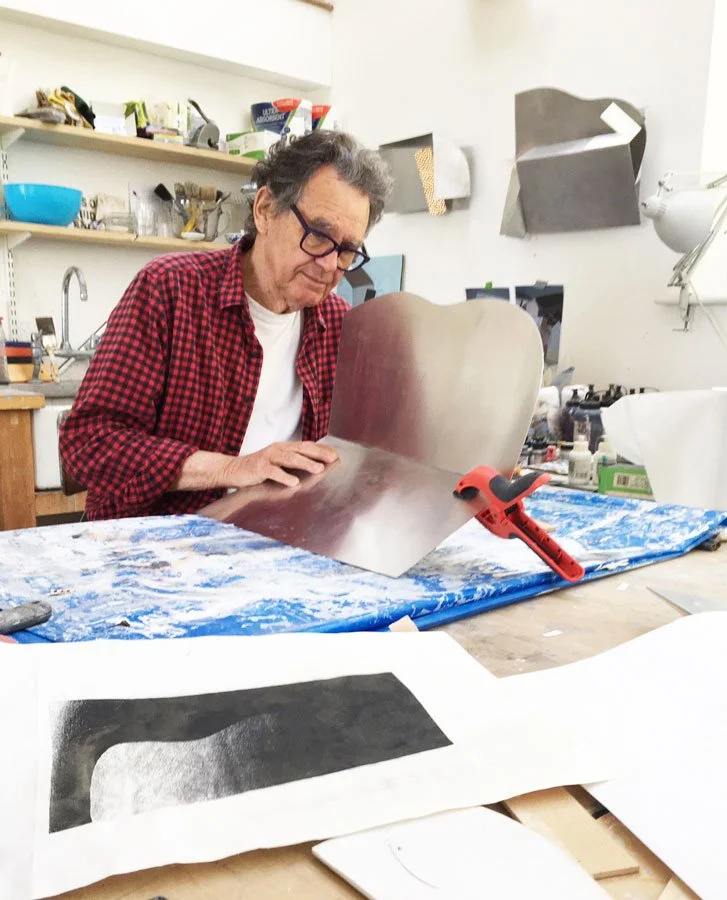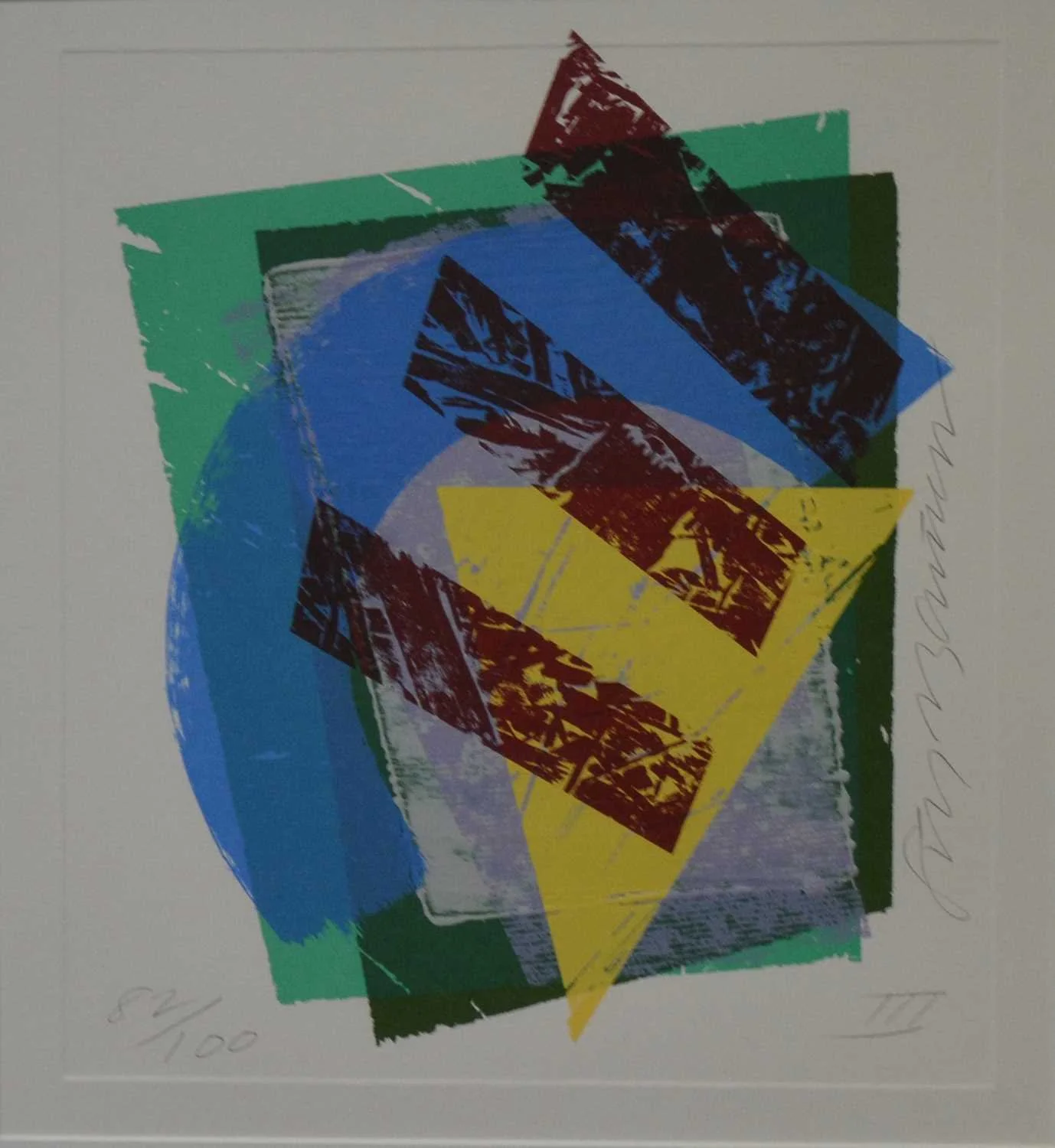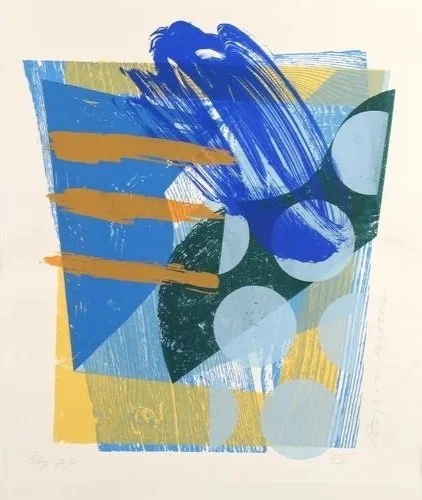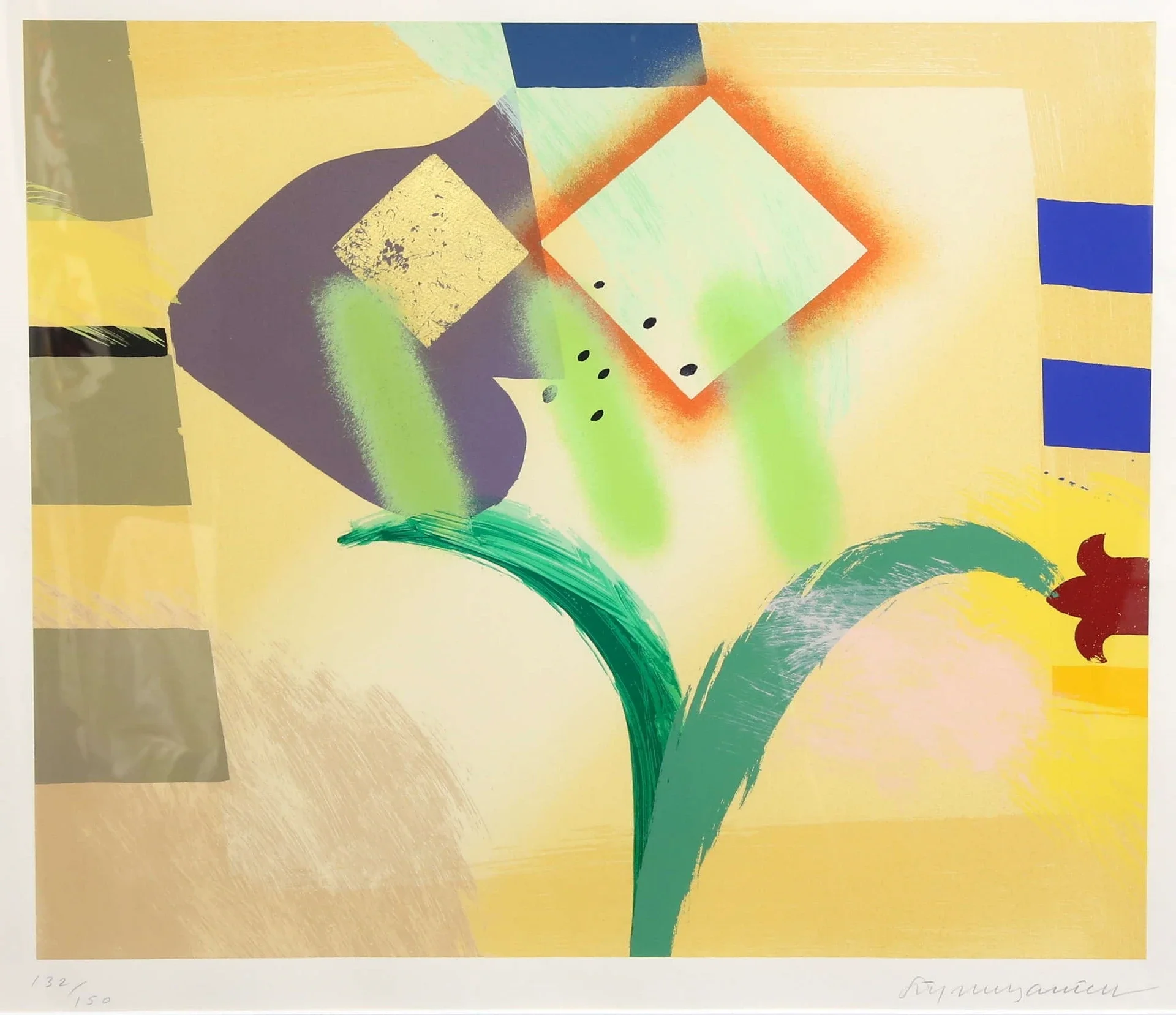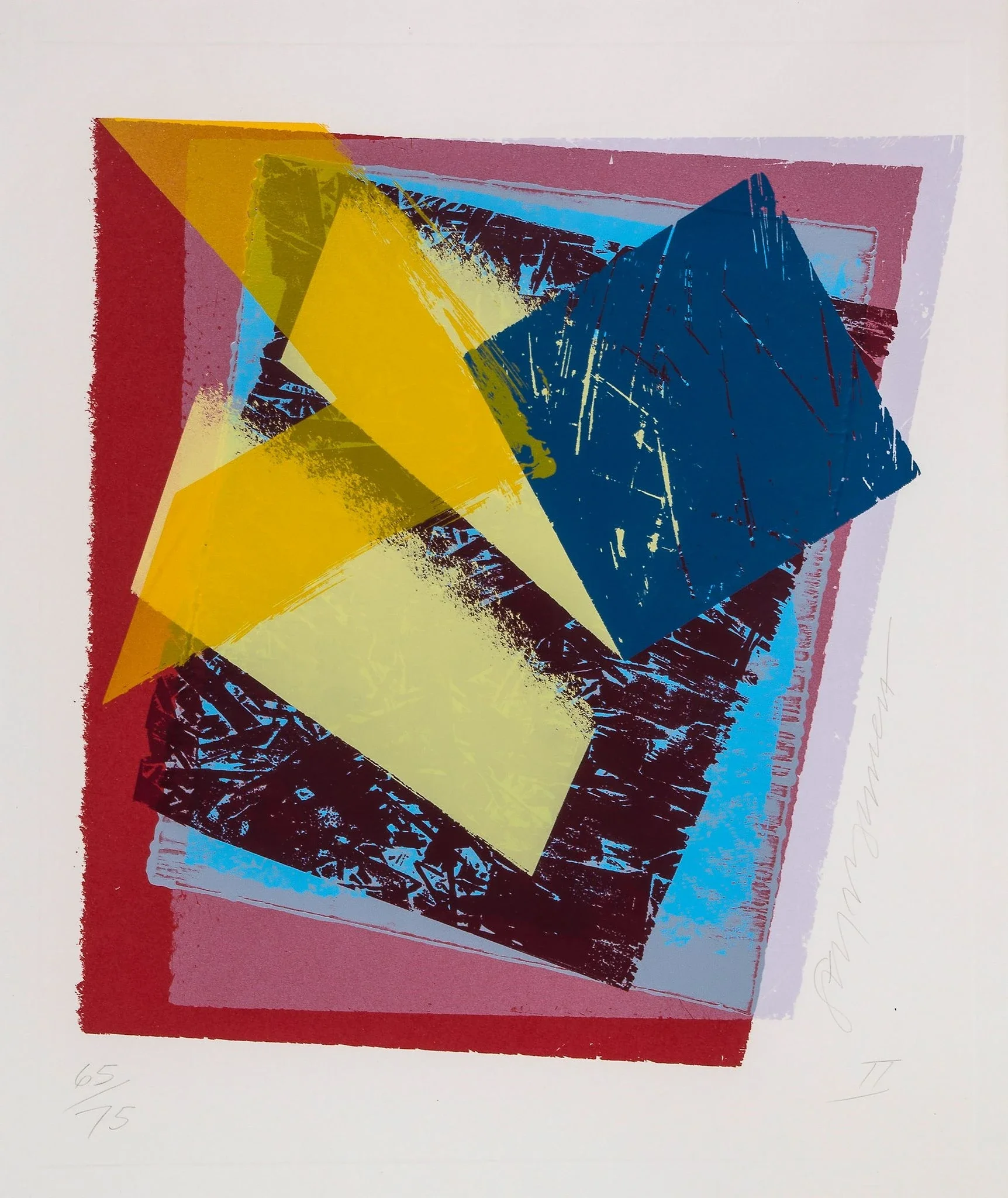
Rooted in a sustained engagement with form, material and the crafted object, Stephen Bartlett has forged a multidisciplinary practice that moves fluidly between sculpture, painting, design and printmaking
Stephen Bartlett
Stephen Bartlett trained in sculpture and industrial design at the Royal College of Art, where he was awarded a Silver Medal and the College Prize for Drawing, distinctions that signalled an early command of precision, draughtsmanship and material intelligence. After a formative period spent teaching at leading British art schools and working within design consultancy, Bartlett established his Fine Art Studio and began exhibiting widely across the UK and abroad, developing a body of work that reflects both the discipline of design and the experimental freedoms of contemporary art.
Throughout the 1970s and 80s, Bartlett’s practice expanded across media, encompassing abstract printmaking, sculptural compositions and hybrid works that tested the boundaries between two‑ and three‑dimensional form.
His sculptural language from this period—exemplified by works such as Pagan Rites (1987), now held in the Alfred East Gallery—demonstrates a sustained interest in the relationship between structure, rhythm and the expressive potential of surface. This multidisciplinary sensibility continued to evolve following his relocation from London to Hastings in 2005, where a dedicated studio environment enabled a renewed focus on craftsmanship, experimentation and the interplay of colour, contour and material.
Bartlett’s current work brings these concerns into sharp focus through wall‑related sculptures in painted aluminium, a mode that synthesises the clarity of industrial design with the chromatic and compositional freedoms of painting. Engaging still life and landscape as generative frameworks, these works operate as both objects and images, negotiating the threshold between sculptural presence and pictorial suggestion. Across six decades, Bartlett has cultivated a practice defined by versatility, refinement and a persistent inquiry into how form—whether cast, cut, painted or printed—can articulate the subtle dynamics of perception and space.