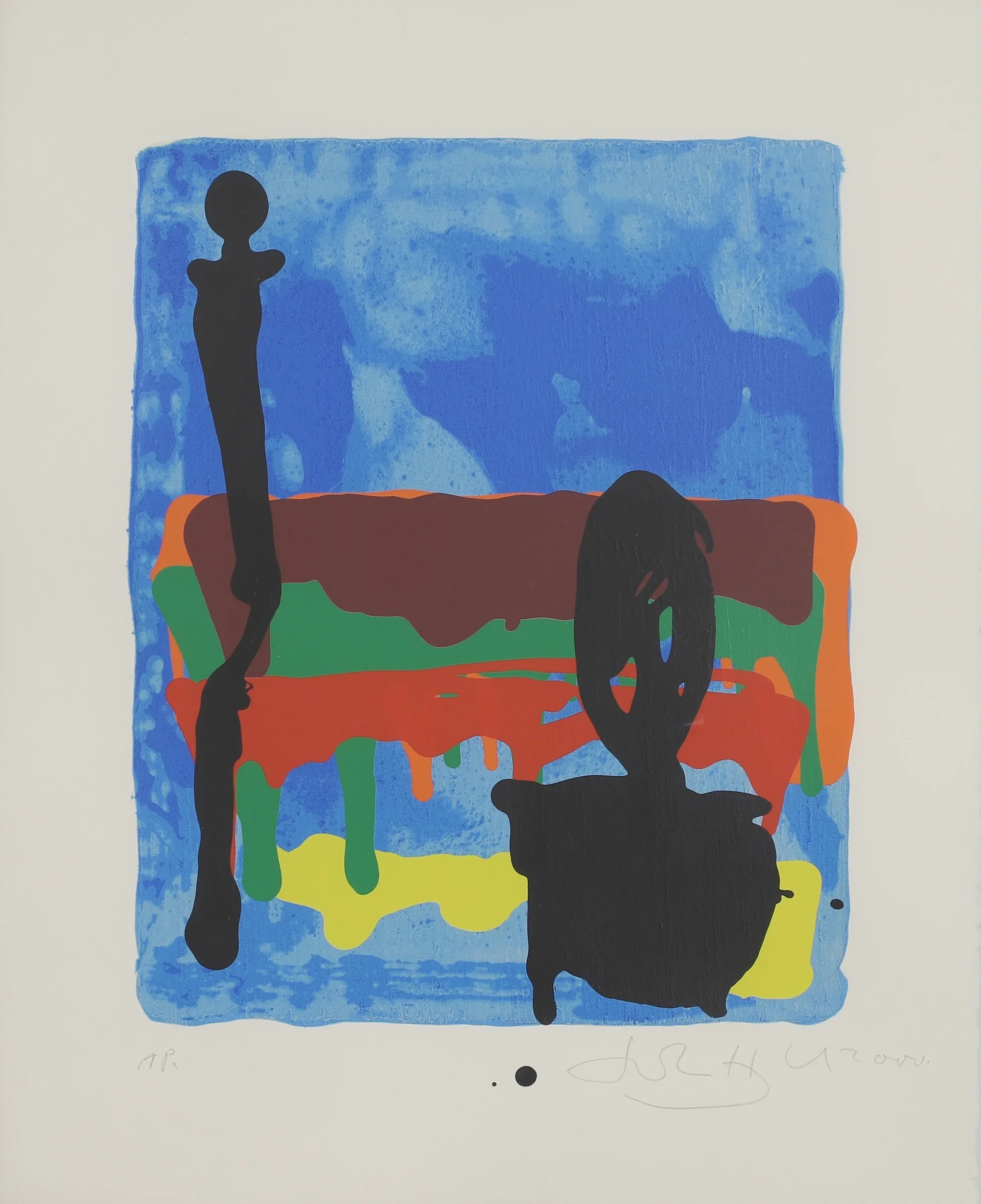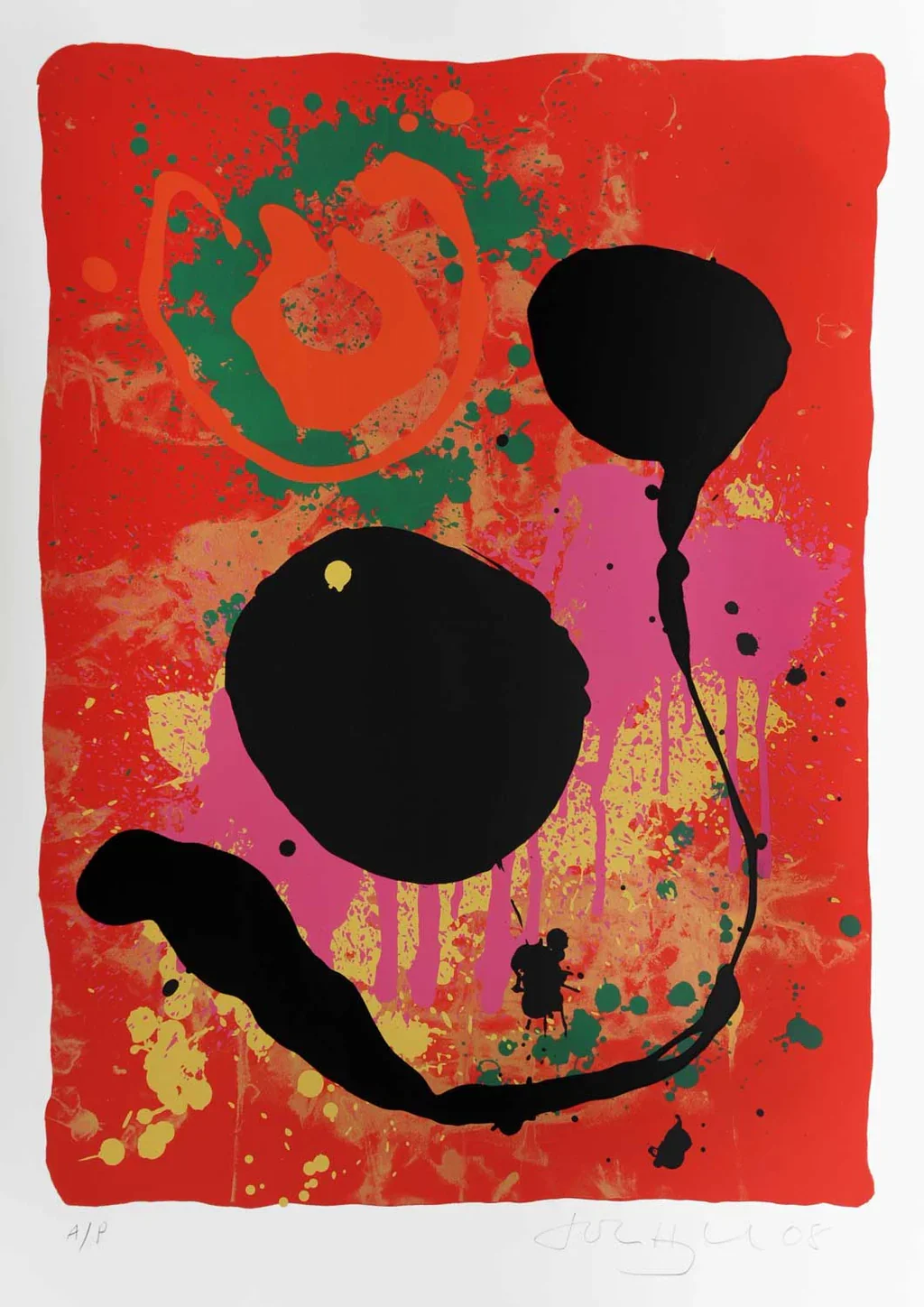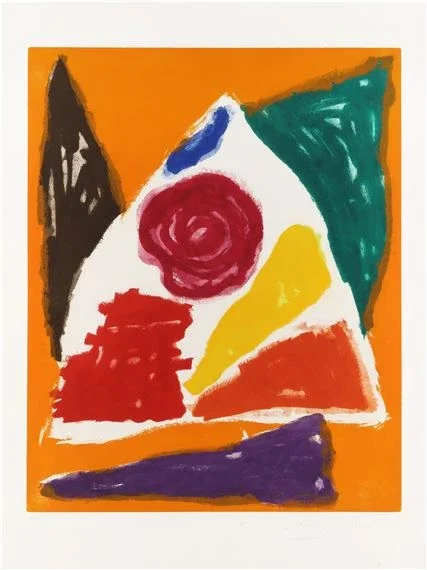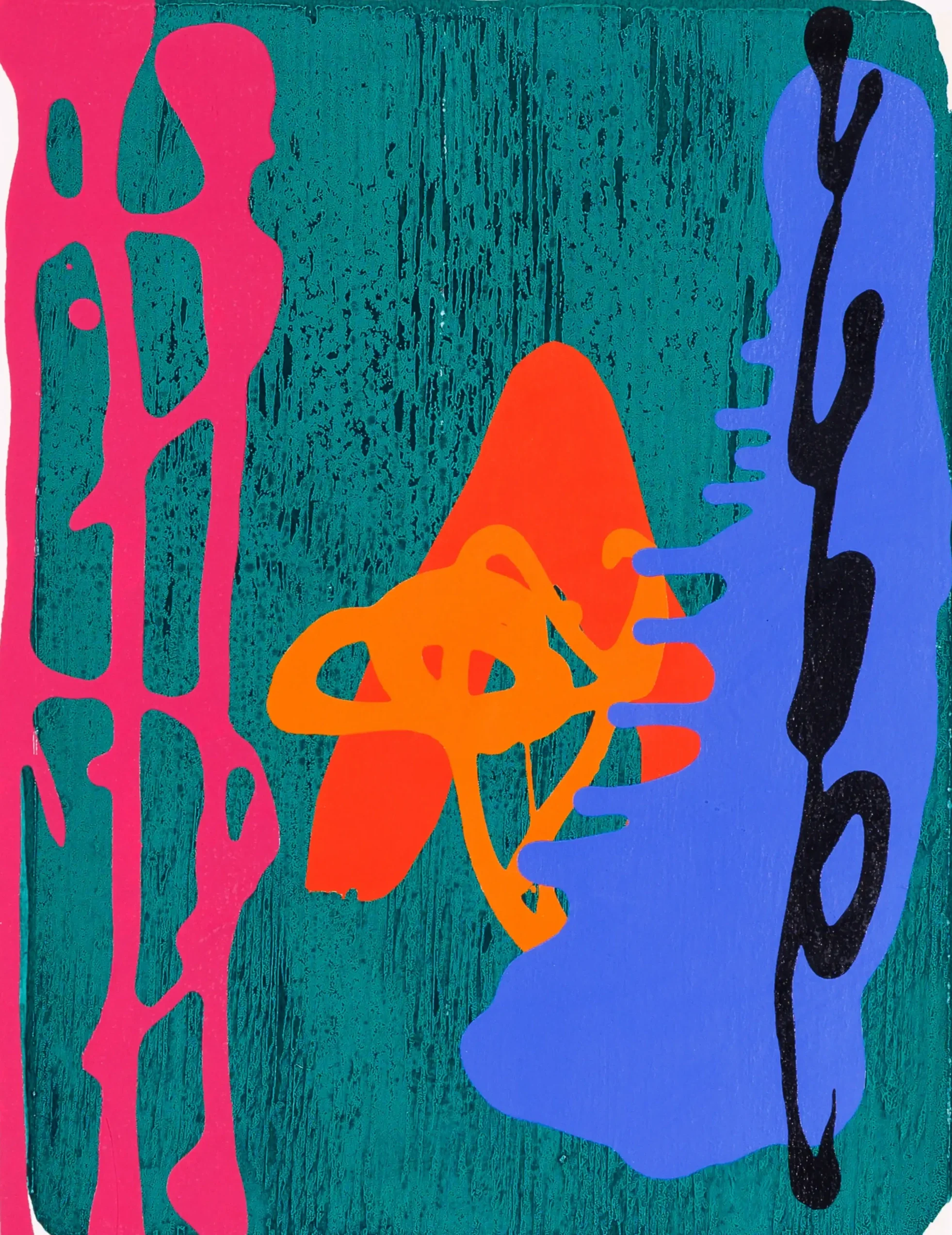
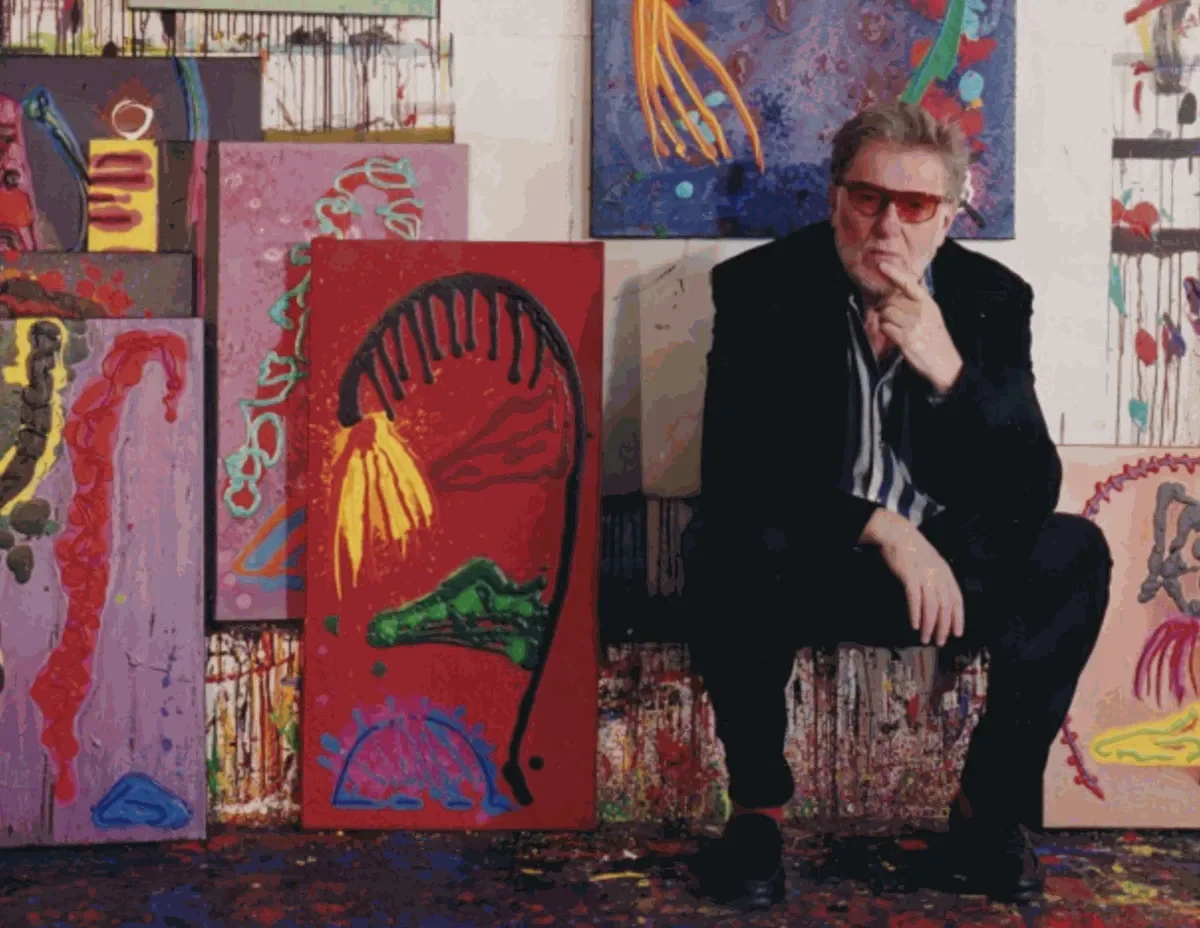
Rooted in a deep commitment to the possibilities of colour, John Hoyland forged a practice that moved from high-key geometric fields to gestural, gravity‑driven surfaces - each phase extending his exploration of how paint can generate space, energy and emotional resonance.
John Hoyland
John Hoyland (1934–2011) was one of the most inventive and uncompromising abstract painters of the post‑war era, a figure whose work pushed colour and form to their expressive limits. Born in Sheffield and trained at the Royal Academy Schools, Hoyland emerged in the early 1960s as a leading voice in British abstraction, shaped by encounters with American Abstract Expressionism and friendships with artists such as Robert Motherwell, Kenneth Noland and Anthony Caro. His breakthrough canvases—vast fields of high‑key reds, greens, violets and oranges—announced a painter deeply committed to the emotional and structural possibilities of colour.
Throughout the 1960s and 70s, Hoyland’s practice evolved in dialogue with the New York art scene, where he lived and worked for extended periods. His paintings from this era defied modernist flatness, using saturated colour, stained surfaces and bold geometric forms to create an illusion of space and a sense of painterly drama. By the 1980s, his work shifted again, embracing earlier European modernisms, global visual cultures and the forces of chance—pouring, splashing and gravity became part of his vocabulary, opening the work to new forms of energy and allusion.
Elected a Royal Academician in 1991 and later Professor of Painting at the Royal Academy Schools, Hoyland remained a restless innovator. His late paintings, made in the face of illness and loss, are among his most powerful: dark grounds animated by swirling colour, floating orbs and luminous pools of paint that suggest both mortality and transcendence. Exhibited internationally and held in major museum collections, Hoyland’s work stands as a testament to a lifelong belief in the capacity of paint to communicate feeling with clarity, force and imagination.
Interview:
“Paintings are there to be experienced, they are events. They are also to be meditated on and to be enjoyed by the senses; to be felt through the eye.”