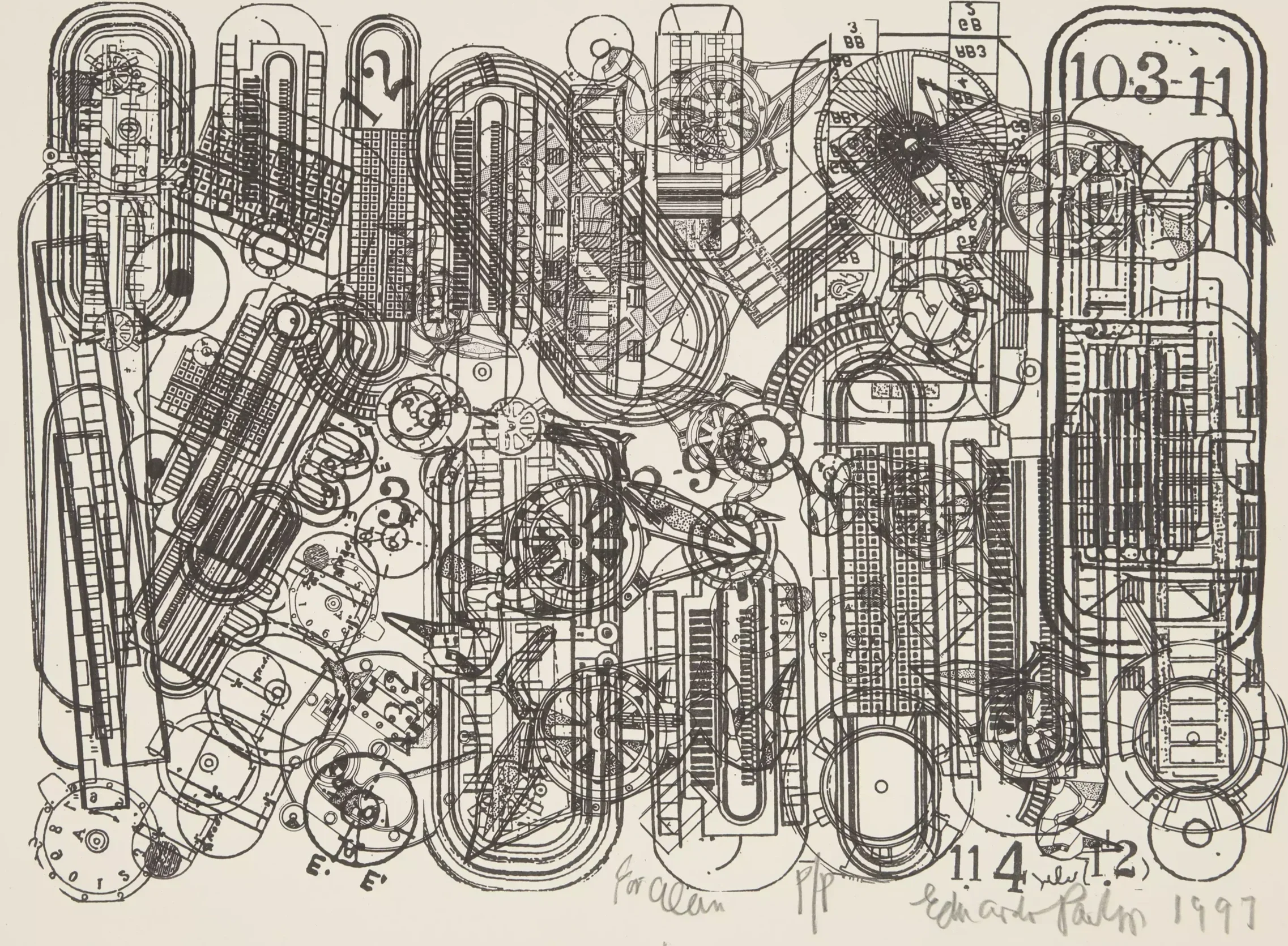
Paolozzi’s work is defined by a restless, electric energy - an art of collisions, juxtapositions and visual overload that mirrors the modern world he so intently observed.
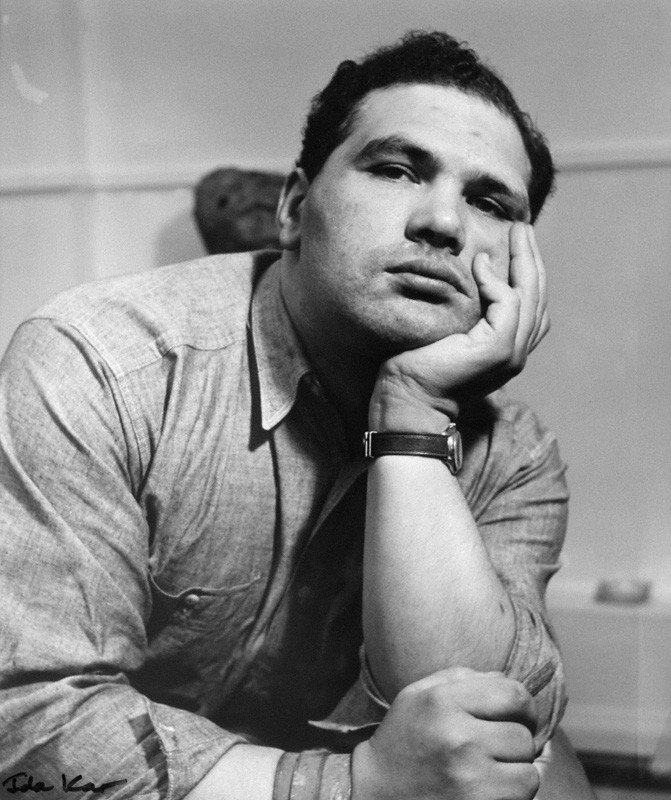
Eduardo Paolozzi
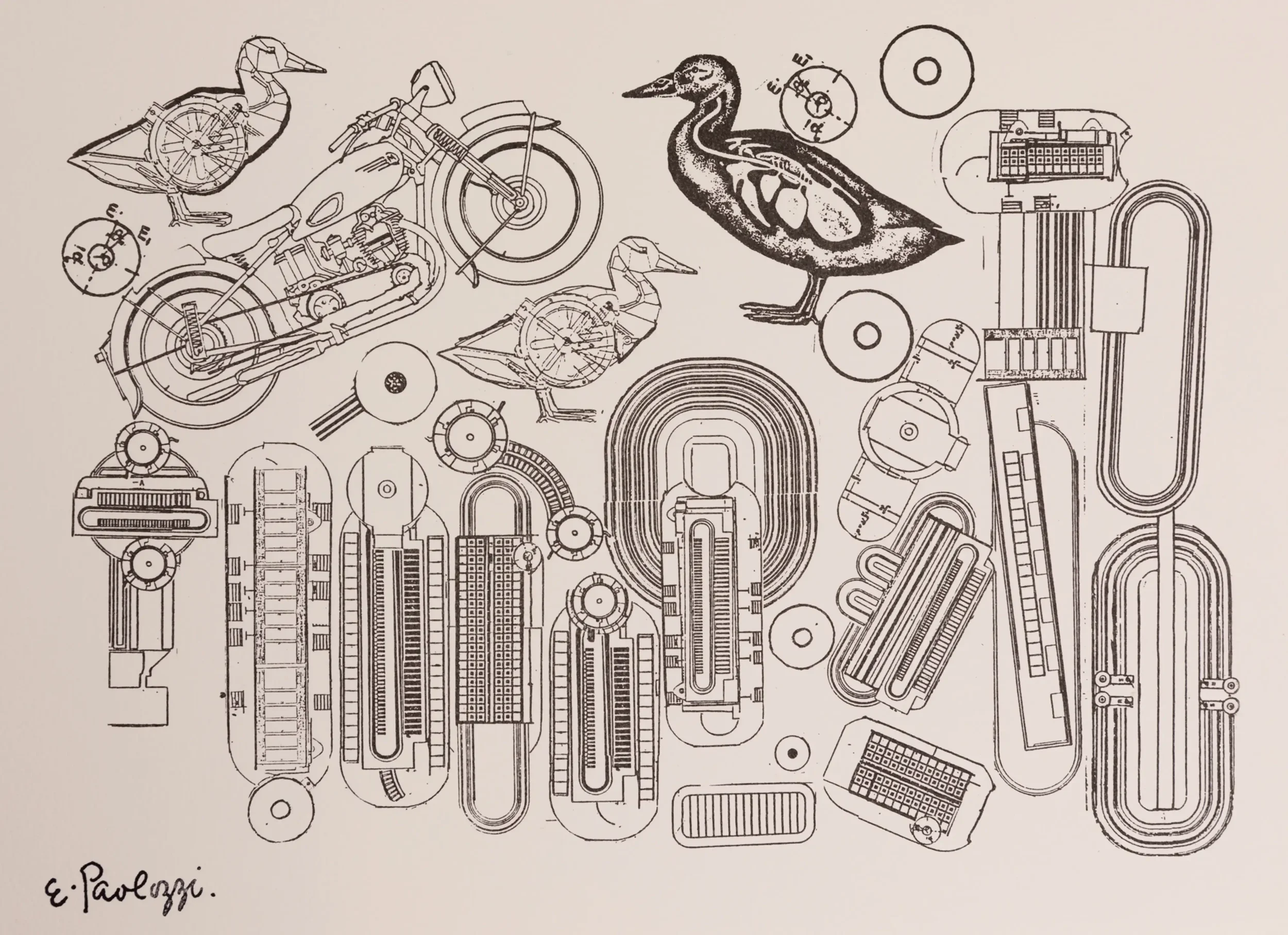
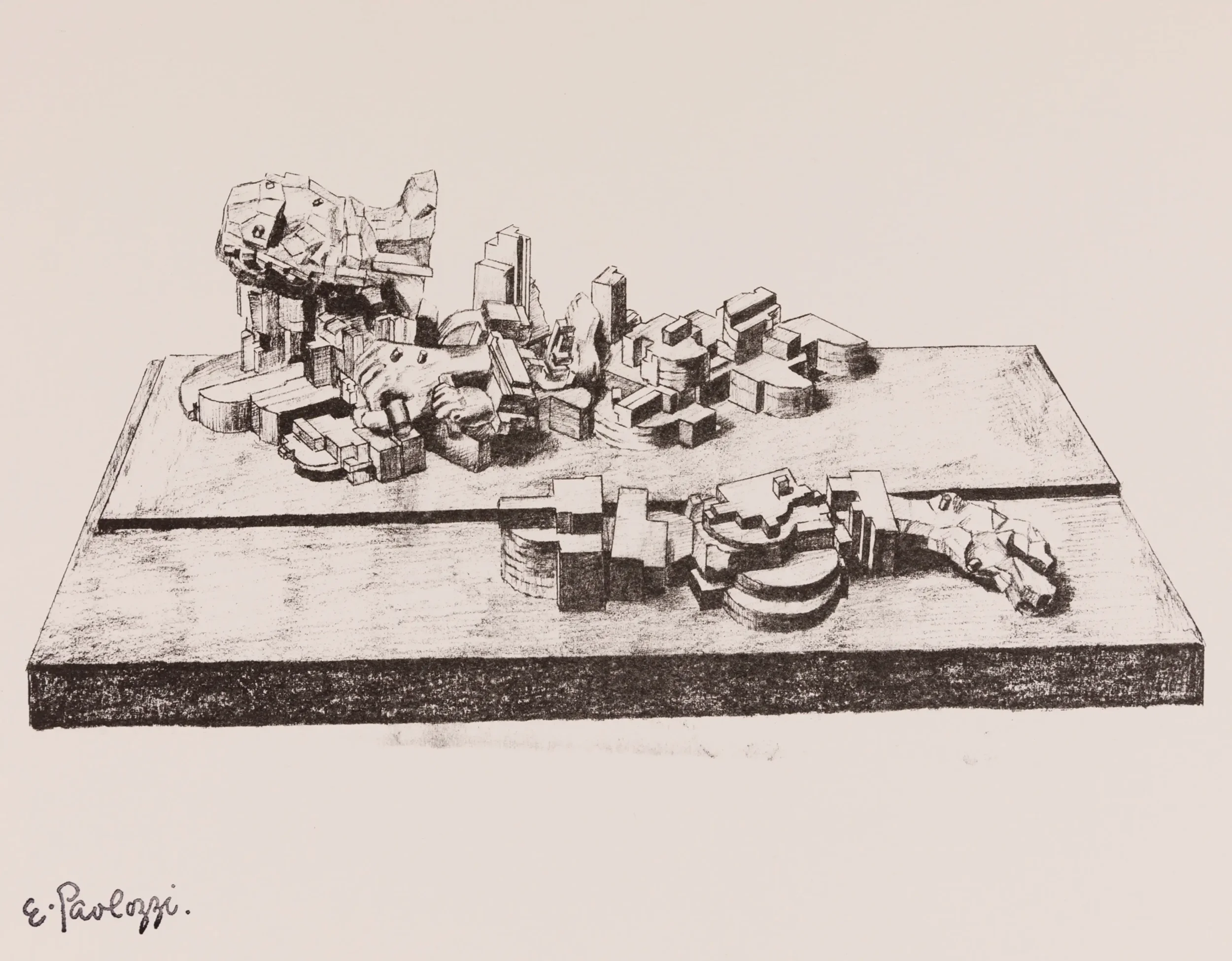
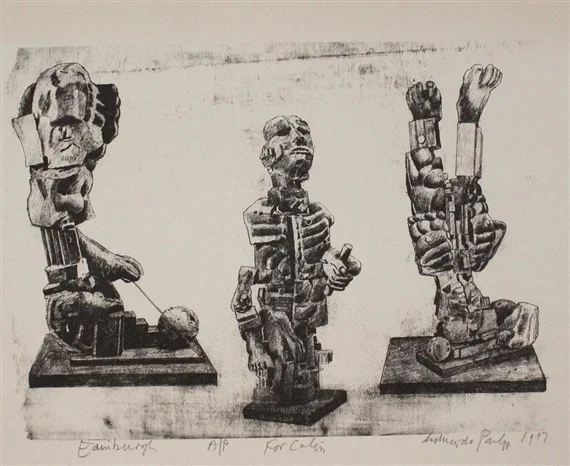
Eduardo Paolozzi’s (1924-2005) practice is characterised by dense, collaged imagery—drawn from magazines, advertising, engineering diagrams and popular media—that he transformed into what he called “ready‑made metaphors.” He created a world of mechanical bodies, fractured narratives and vibrant modernity.
At the heart of Paolozzi’s practice lies a fascination with the visual overload of postwar culture. His early collages, including I Was A Rich Man’s Plaything, anticipated the arrival of Pop Art and helped shape the discussions of the Independent Group, which he co‑founded in 1952. Their groundbreaking exhibition This is Tomorrow at the Whitechapel Gallery signalled a new era in British art, embracing popular imagery, found objects and immersive installation.
An inventive and prolific maker, Paolozzi worked across sculpture, drawing, ceramics, textiles and film, though printmaking remained a central pursuit. His celebrated series As Is When (1965) demonstrates his mastery of screenprinting and photo‑lithography, merging philosophical ideas with the saturated colour and graphic intensity of the 1960s.
Paolozzi’s public commissions became landmarks of modern British art. His vibrant mosaics for Tottenham Court Road station (1986) and the monumental bronze Newton after Blake (1995) at the British Library exemplify his ability to translate complex visual systems into architectural scale. These works continue to shape the visual identity of London’s public spaces.
Knighted in 1989 and elected a Royal Academician in 1979, Paolozzi remains a defining figure of postwar British art. His legacy endures in major collections worldwide, with a dedicated Paolozzi Studio at the Scottish National Gallery of Modern Art preserving the energetic, collage‑like environment in which he worked.