Paola Bazz is an Italian contemporary artist whose intricate paper-based works explore identity, consumption, memory and the transformation of discarded materials.
Paola Bazz
Based in Padova (Padua), Italy, her practice combines her background in painting, drawing and architecture with a fascination for the possibilities of recycled printed paper.
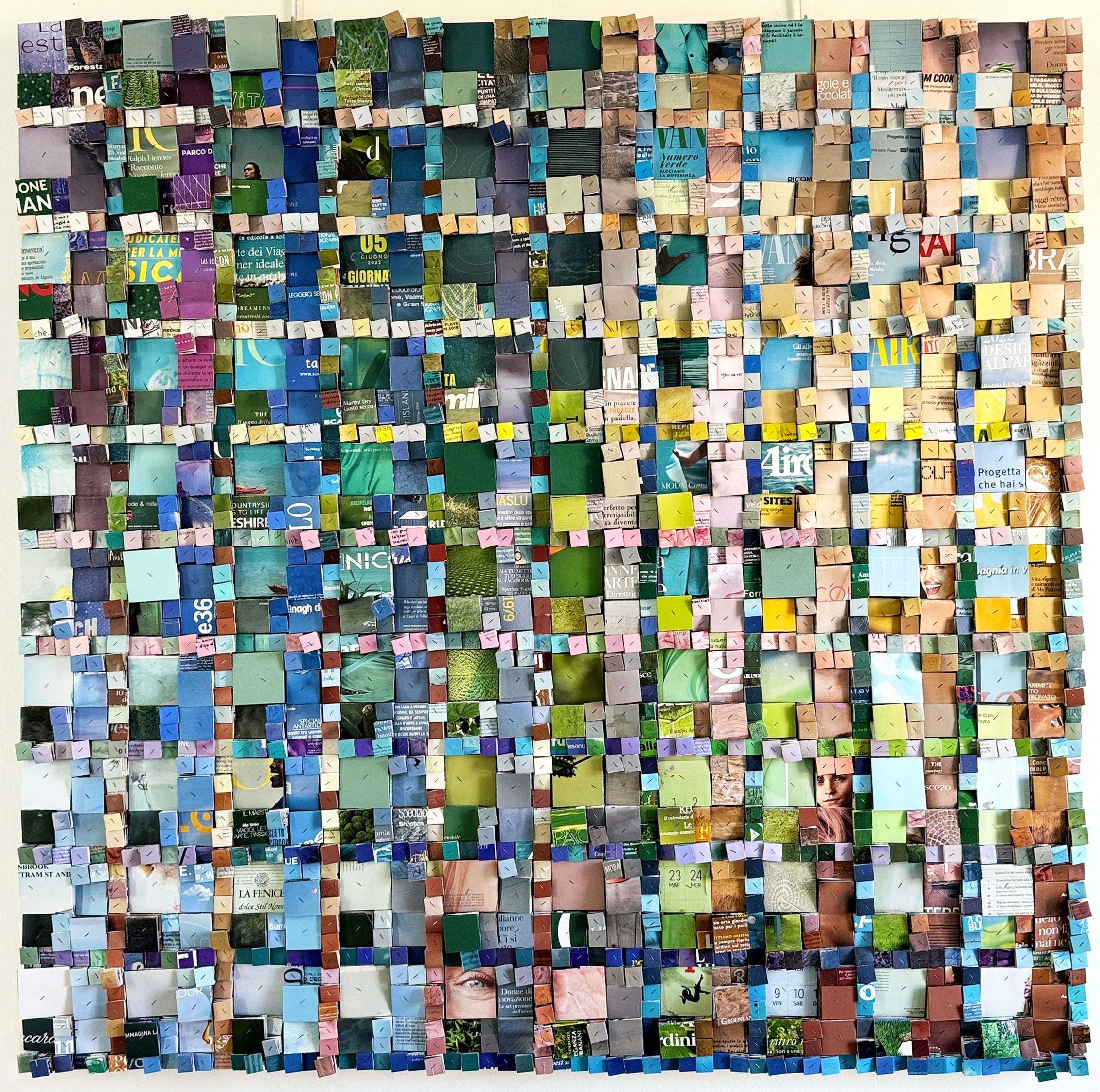
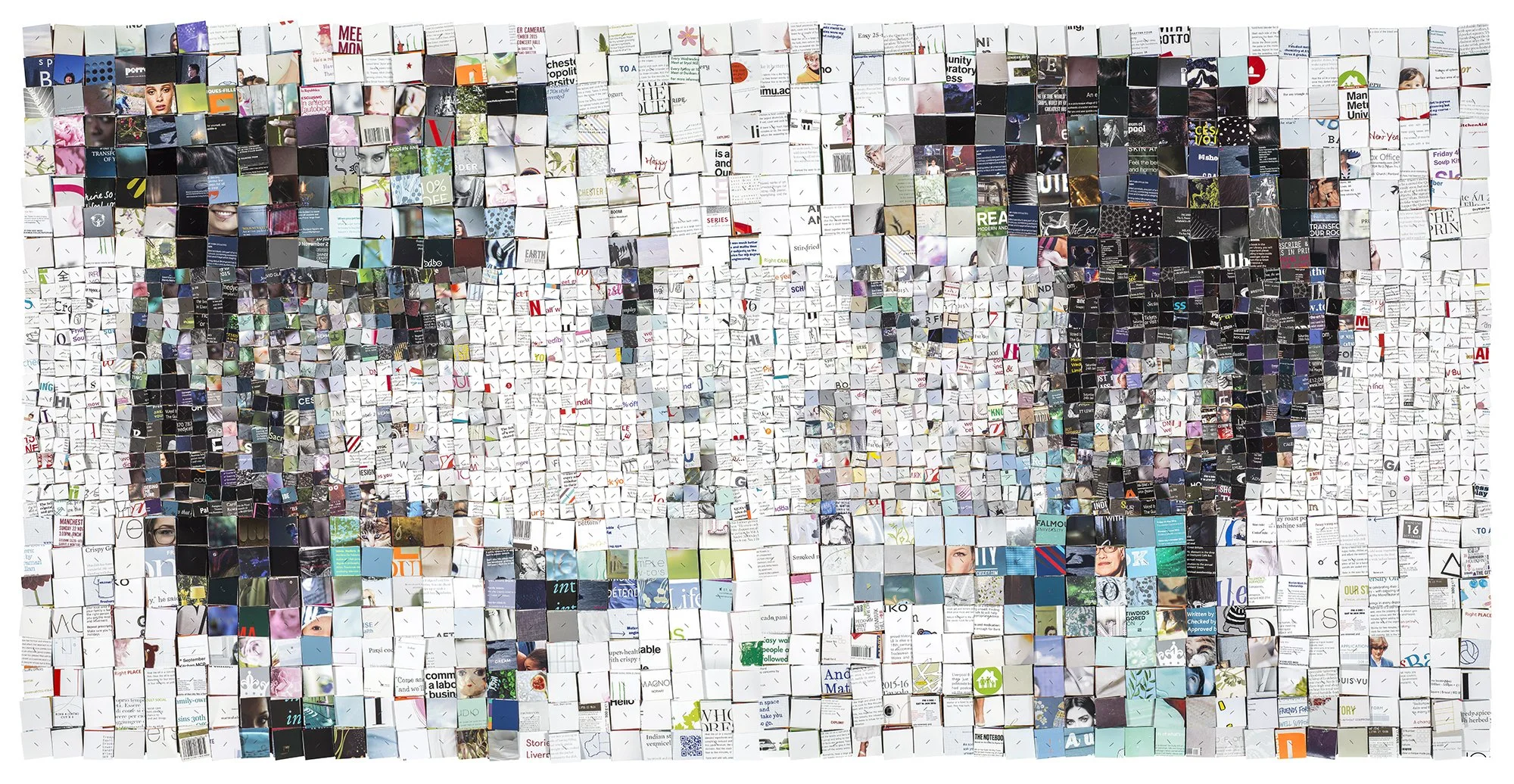
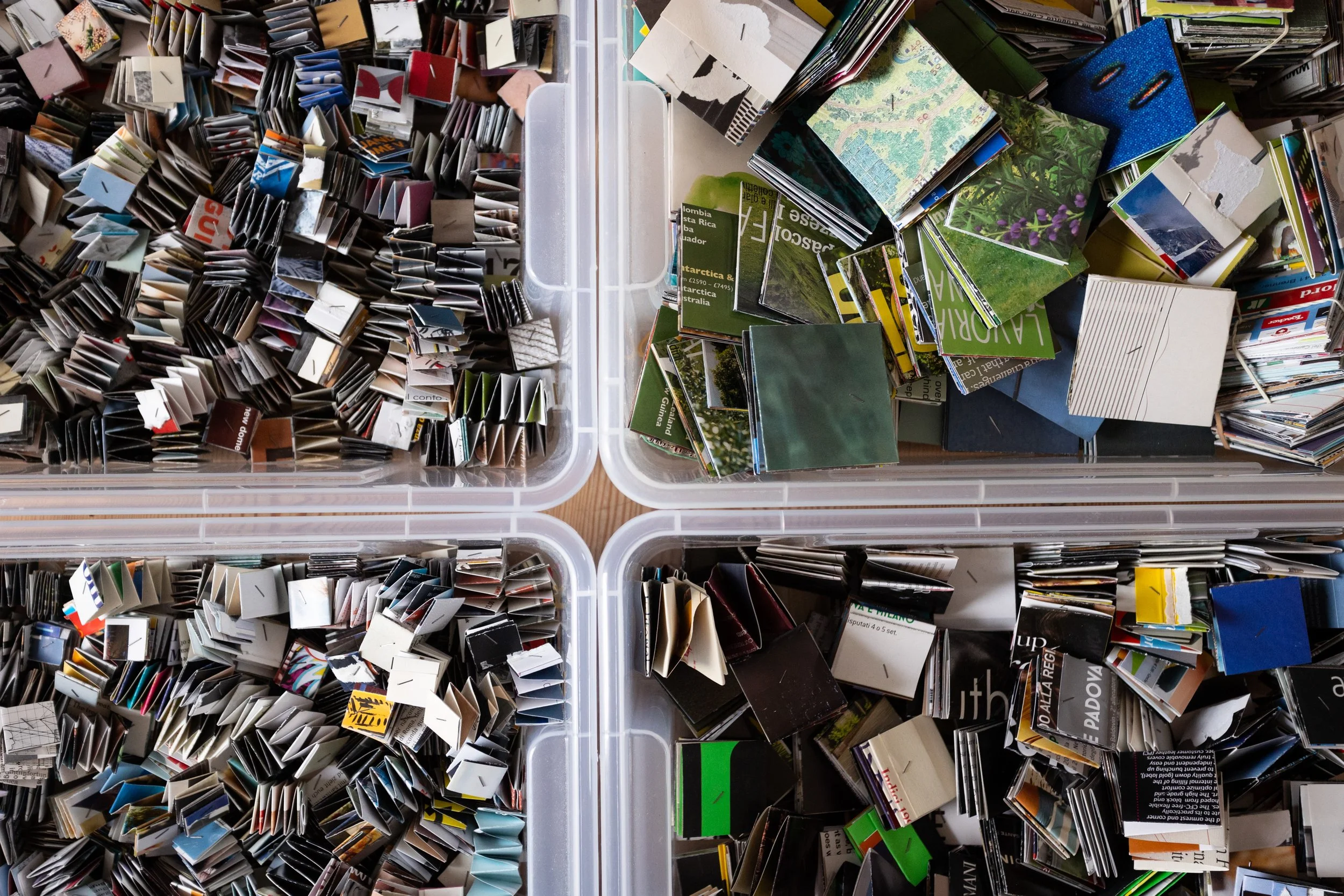
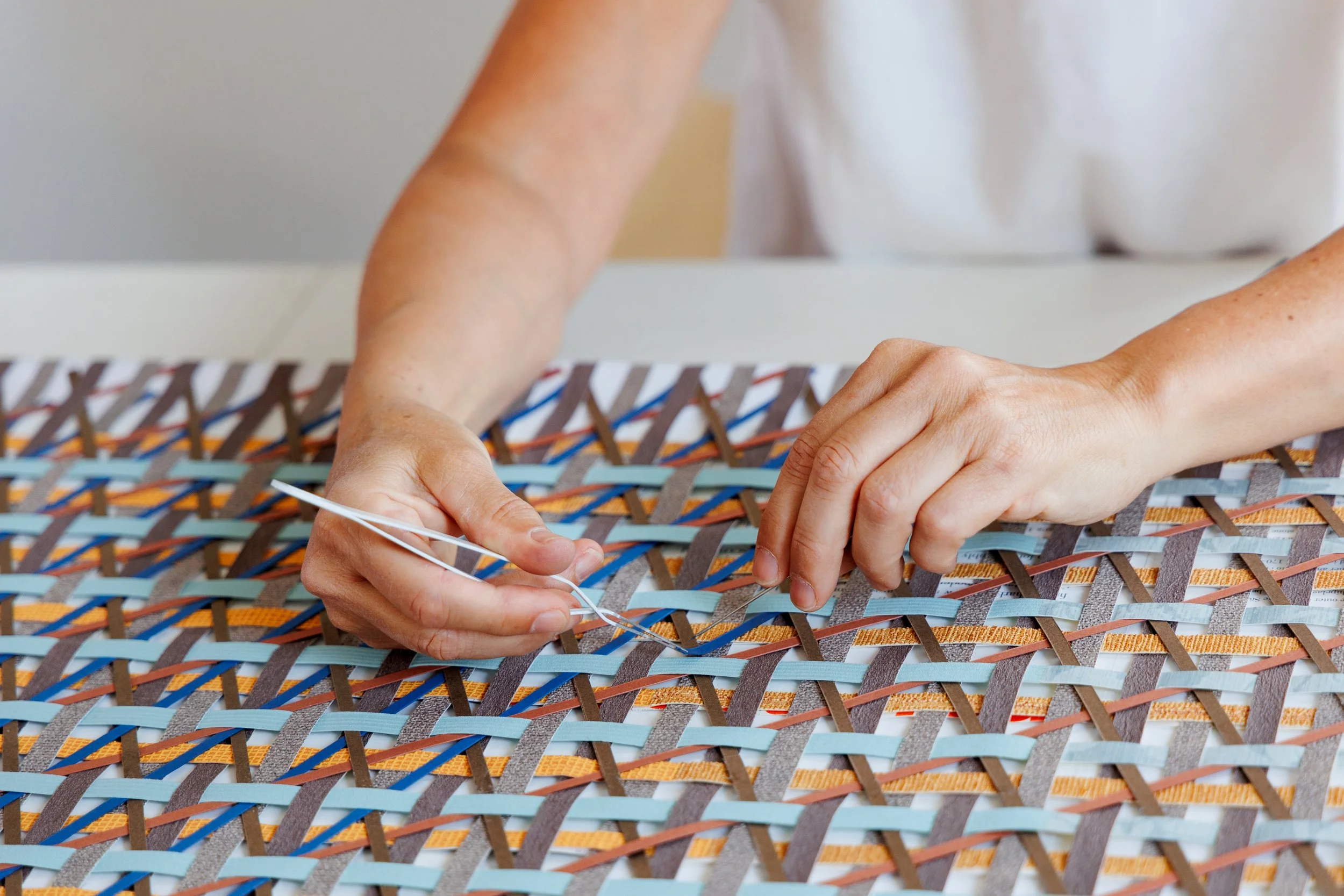
Working with magazines, newspapers and catalogues sourced from around the world, Bazz carefully selects each sheet for its colour, texture and thickness before cutting, folding, weaving and reconstructing the material into detailed two- and three-dimensional collages. Her fragmented portraits and abstract compositions move between figuration and abstraction, inviting viewers to look beyond the visible image and discover layers of faces, words, colours and cultural references.
Bazz's practice combines digital processes, including scanning and precision cutting, with traditional techniques such as origami, kirigami and paper weaving.
Influenced by a lifelong appreciation for creativity, resourcefulness and the reuse of materials, her work transforms printed paper — once a vehicle for advertising and consumer messaging — into tactile artworks that consider sustainability, privacy, identity and the impermanence of things.
Bazz studied painting, drawing and architecture at IUAV University in Venice and worked professionally as an architect from 1991 to 2010, while continuing to exhibit her paintings and drawings. In 2008 she began experimenting with recycled printed paper and, in 2010, dedicated herself fully to her art. She lived and worked in the UK, including Manchester, from 2012 to 2021 before returning to Italy. Now based in Padova, her work has been exhibited internationally, including in Brussels, Manchester, London and New York. Influenced by artists such as Jean-Michel Basquiat, Chuck Close and Jean-Pierre Yvaral, Bazz creates visually striking works that invite viewers to reconsider the relationship between image, material and contemporary society.
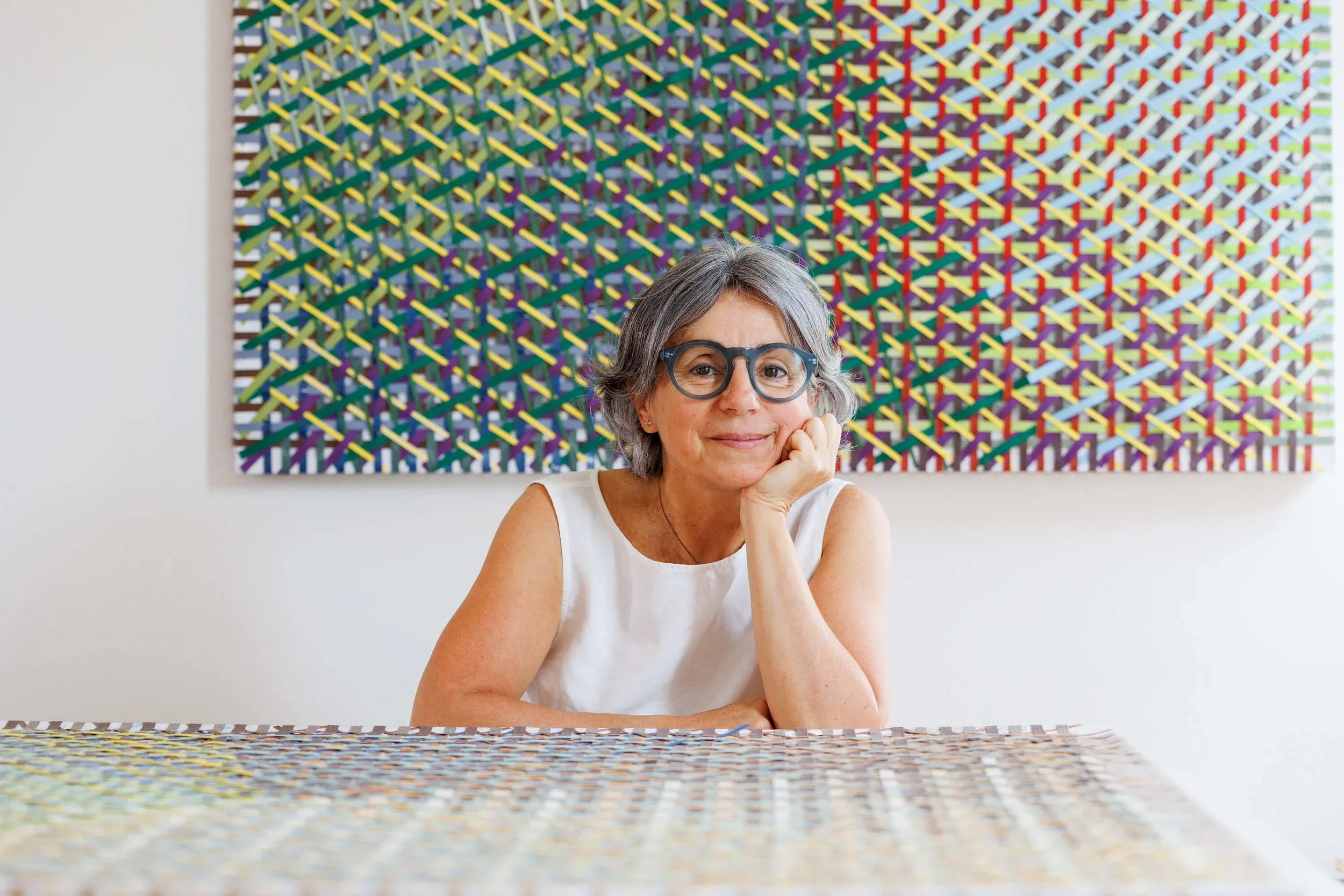
‘‘Printed paper—once a vessel for consumer messaging—lets me explore the themes of identity, consumption, memory, and the impermanence of things. Through portrait and abstract work, I invite viewers to look beyond the visible, to see how discarded materials carry stories, and to consider sustainability, environment, and privacy.’’